

.png)

Read Time : 3 Minutes
Types of Infrared Heaters: Far Infrared vs Near Infrared
What are the different types of infrared heaters?
Broadly speaking there are two main categories of infrared heater that we see on the market today. Far infrared sits at the longer-wavelength end of the infrared spectrum, has a lower surface temperature and is commonly used in appliances such as the infrared panels that are increasingly being installed in homes and offices across the UK.
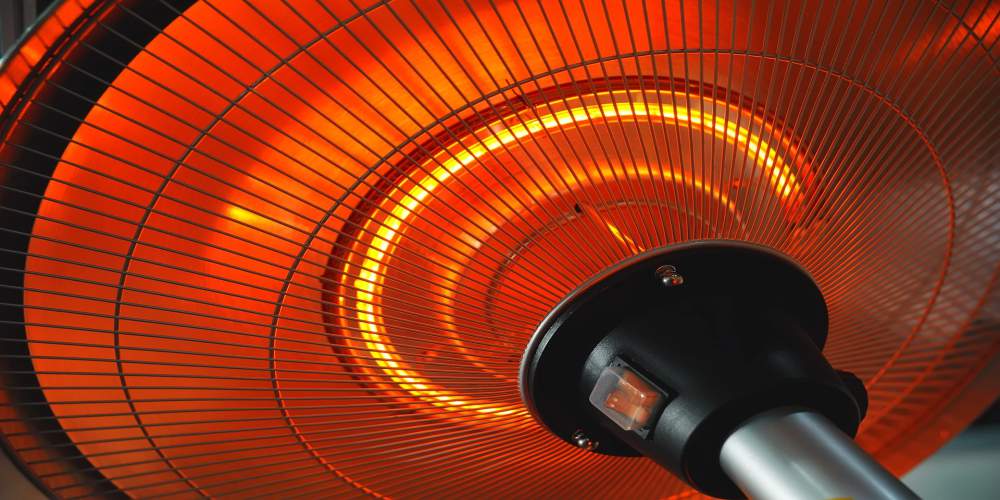
Near infrared is the more visible option, characterised by the orange glow, and is found in things like patio heaters and heat lamps on both a domestic and commercial scale. Whilst near infrared has been around for some time, it’s the beneficial properties of far infrared heating that seem to be gaining ground with those who want an electric alternative to traditional heating systems, with running costs dependent on electricity prices and property efficiency.
Far infrared heaters
Essentially infrared works by warming the surface of an object (a desk, floor, wall or even a human body) and this is then radiated back into the room as heat. The process is the complete opposite to convection systems which work purely by warming the air around them.
Today’s heaters are designed to work in conjunction with thermostats and are thought to be a cost effective way of providing heat to a building, particularly when paired with good insulation and modern controls. Particularly in the UK, the new kid on the block is the infrared heating panel which can now be purchased in a range of designs that can add style and sophistication as well as an effective solution for warming up homes and offices.
Various manufacturers claim that infrared panels cut the cost of heating a home by up to 70% if installed in the right location. Actual savings vary significantly depending on the system being replaced, electricity tariffs, insulation levels and how the heating is used. That is why many people are now starting to consider this technology over and above conventional boiler and radiator systems. Infrared heating panels can be used in both a domestic and commercial environment and are considered more flexible than other systems.
For instance, you don’t have a large pipe network and you don’t need to be hooked up to a boiler. You can opt for different styles, disguising the panel as a decorative picture or mirror or even part of the furniture. Many new builds are beginning to incorporate infrared heating panels rather than older forms of heating but it is also just as easy to retrofit a building, subject to electrical capacity and layout.
People are turning to them because unlike radiators they can be less obtrusive – you can even mount the panels on the ceiling to increase the area of room coverage. They are used in a variety of situations including saunas, care homes, shops and now more and more in domestic properties and offices. All in all, far infrared panels have a number of advantages and you can discover more of them here.
COMPARE PRICES FROM LOCAL INSTALLERS
Compare prices from local companies fast & free
Enter your postcode to compare quotes from leading professionals. We promise to keep your information Safe & Secure. Privacy Policy
Near infrared heaters
Because they operate closer to the red end of the spectrum, near infrared heaters are typically higher intensity and shorter wavelength and are often characterised by the orange glow of their filament when they are switched on. Whilst many people will be familiar with the bar fires of old they are perhaps not aware that they are infrared. They generally emit a much higher temperature than far infrared heaters and are designed to provide immediate, localised heat rather than whole-room heating. If you get too close they can cause discomfort and, with prolonged exposure at close range, irritation.
Uses of near infrared heaters include: patio heaters, health lamps, factory processes such as drying paint and a variety of other both domestic and commercial uses.
Suppliers of Far Infrared Panels
The infrared panel industry is beginning to grow quickly in the UK now that we are all a little greener in our outlook and willing to spend some money on it. Infrared panels are seen as a space-saving electric heating option for many home and office owners who want to move away from traditional heating systems that rely on fossil fuels.
There is one thing that you need to keep an eye on if you are looking to incorporate this kind of technology into your home or office and that is there are a number of products marketed as infrared heaters that rely heavily on convection, such as halogen heaters combined with fans. As with any new installation in your home and office it pays to get the right advice and to get a number of quotes from different installers.
You can search for an infrared panel installer on our comprehensive database here.
The future of infrared heaters
As with most green technologies there is a lot of work going on behind the scenes in creating more efficient and more sustainable ways of heating and lighting our homes and infrared heating is no exception.
For a while now there have been several reputable sources that have suggested infrared could play a role in the future mix of electric heating technologies, particularly when combined with improvements in insulation and on-site generation such as solar panels, rather than being a universal replacement for all heating systems. This approach has the potential to reduce carbon footprints and, in the right circumstances, lower household and business energy costs.
Find a local installer
Welcome to the biggest directory of UK renewable energy companies
 Types of Infrared Heaters: Far Infrared vs Near Infrared