The recent joint US and Israeli air strikes on Iran, and subsequent regional retaliation, across the Middle East have resulted in fossil fuel prices surging again. The conflict is the biggest disruption to oil and natural gas markets since Russia’s invasion of Ukraine in 2022. New research by the Transition Security Project has revealed that the fossil fuel crisis, caused by the Russian war cost the EU and the UK $1.8tn between 2022 and 2025, driving up energy bills and escalating a crippling cost of living crisis. The fossil fuel crisis left the EU and the UK increasingly dependent on US liquefied natural gas (LNG) imports.
COMPARE PRICES FROM LOCAL INSTALLERS
Compare prices from local companies fast & free
Enter your postcode to compare quotes from leading professionals. We promise to keep your information Safe & Secure. Privacy Policy
The turmoil in the Middle East has caused operations to be halted at several oil refineries and natural gas facilities across the region, and fossil fuel exports through the Strait of Hormuz are almost completely blocked. Qatar shut down the world’s largest liquefied natural gas export facility and Saudi Arabia has suspended operations at its biggest oil refinery. Air strikes are looking likely to continue in the weeks to come which could lead to further uncertainty around energy security and further price rises. Wholesale gas prices have already risen by 67% and oil prices by 35% and it’s only been a couple of weeks so far.
Climate groups, academics, and energy experts are calling for the UK to step up its clean energy drive to protect bill payers from increasingly turbulent fossil fuel markets. The ongoing conflict has highlighted the need for the UK to end its dependence on such an unstable energy source.
Bob Ward, from the Grantham Research Institute at the London School of Economics, has warned that the conflict in the Middle East and ensuing surge in oil and gas prices could lead to significantly higher energy bills for British households and consumers.
“The UK is vulnerable to the volatility of international fossil fuel markets, and the only way to protect ourselves from these price increases is by speeding up the transition to domestic supplies of clean energy, namely renewables and nuclear power.”
The Resolution Foundation said:
“The escalating conflict in the Middle East has now triggered a sharp rise in oil and gas prices which could cause living costs to start rising more quickly again. If sustained, these rises could add over £500 to the typical household energy bill in the summer and roughly a percentage point to inflation – bringing another unwelcome cost of living shock to families.”
Although the world currently has an oversupply of oil and gas, a lengthy conflict would reshape energy markets.
According to a Reuters analysis:
“The conflict risks triggering a spike in inflation that could choke off economic recovery in Europe and Asia if the war is prolonged in a region that accounts for just under a third of global oil production and almost a fifth of natural gas.”
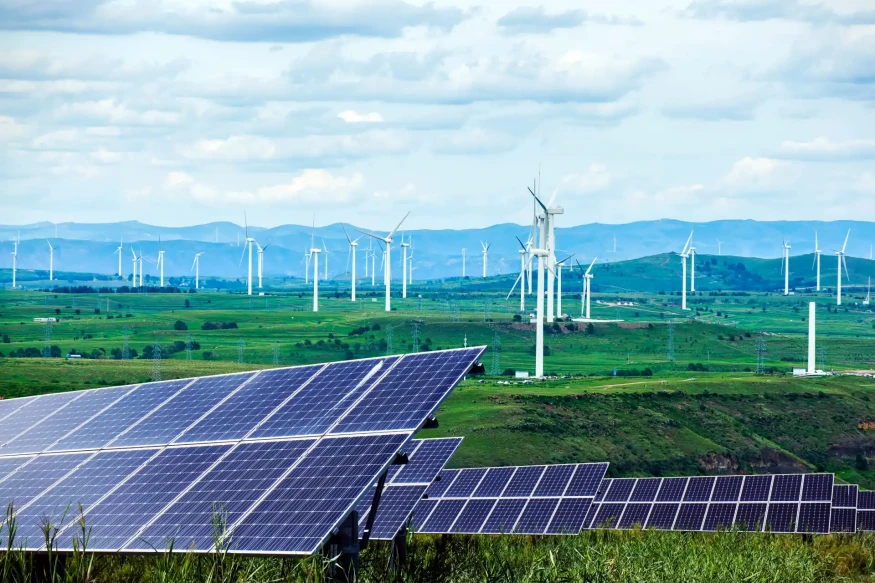
Despite the negative effects that the disruption has had on the fossil fuel market, the current situation could benefit the renewable energy industry. Options such as solar and wind would allow countries to rely less on energy imports for their power needs. An energy strategist from Ember made the point that the longer the conflict lasts, the more pressure there will be to turn to alternative solutions, such as renewables.
For UK homeowners, installing solar panels and battery storage can significantly reduce reliance on imported fossil fuels while protecting households from future price shocks driven by global conflicts.
Another thinktank, Agora Energiewende, stated that because renewable capacity has increased in the last 5 to 10 years, European countries have been able to cope with recent energy crises far better. It’s likely therefore that continued conflict in the Middle East could result in much more widespread adoption of renewable energy technologies in the near future.
The UN’s climate chief, Simon Stiell, said that the latest turbulence in the Middle East showed us yet again that fossil fuel dependence leaves economies, businesses, markets and people unprotected against each new conflict or trade policy lurch.
“There is a clear solution to this fossil fuel cost chaos – renewables are now cheaper, safer and faster-to-market, making them the obvious pathway to energy security and sovereignty.”
The report published by the Transition Security Project looking into the 2022 energy crisis showed that the rising costs came through higher household and business energy bills and from the cost of government policies such as price caps, rebates and tax cuts, which aimed to soften the direct impact on consumers of the fossil fuel crisis.
The author of the report, Kevin Cashman concluded that the 2022 energy crisis “presented a fork in the road for Europe – double down on volatile fossil fuel markets, or pivot to homegrown clean energy and greater security. The failure to do the latter has left people on ordinary incomes paying the price for an irresponsible and shortsighted energy policy.”
However, rising prices in the energy markets can make it more difficult to install new clean energy projects. Escalating prices can lead to rising inflation and interest rates which could make it harder to secure financing for new projects.
Tessa Kahn, the executive director of Uplift doesn’t believe expanding the oil and gas industry is the answer. In her opinion new fields such as Rosebank would do nothing to protect UK households from the inevitable price shocks caused by war in the Middle East.
“Rosebank is an oilfield whose reserves, if developed, would be exported – like 80% of all UK oil. It contains minimal gas. In the best case, it would provide just one per cent of UK gas demand. Like all North Sea production, it would do nothing to lower our energy bills.
This is not the first time we have seen the gas price soar off the back of conflict, and it will not be the last. We need this government to urgently learn the lessons of the past five years – that the UK’s dependence on oil and gas is making us all poorer – and instead, free us from fossil fuels by doubling down on renewables and upgrading homes.”
Tessa Kahn pointed out that even if the UK was to continue to develop new fields, it would still become almost entirely dependent on gas imports by 2050, due to the diminishing oil and gas reserves in the North Sea basin. This strategy would leave bill payers and businesses highly exposed to price shocks for decades to come despite the UK possessing some of the best wind resources in the world.
The UK government is responding to the Middle East crisis by doubling down on plans to accelerate renewable energy deployment. The latest crisis has served to remind us how dependent we currently are on unstable international fossil fuel markets and has led some industry leaders to urge for a reassessment to prioritise energy independence, citing the need for robust domestic energy supplies during conflict.
Here are some of the key elements of the government’s plan:
- Offshore Wind Expansion: The government has removed tariffs on 33 different goods used for offshore wind infrastructure, effective from 1st April 2026, to reduce costs for British manufacturers.
- Clean Power (CP2030) Focus: The government has reinforced its goal for 95% of electricity generation to come from clean sources by 2030, with a heavy emphasis on increasing the rate of deployment for offshore wind and solar.
- Planning and Grid Acceleration: The Planning and Infrastructure Act (passed in late 2025) is being used in 2026 to speed up the approval process for major infrastructure projects.
- Support for Domestic Generation: Greater focus is being put on developing on-site generation for businesses and farms to reduce exposure to global shocks.
- Industrial Strategy Focus: Clean energy remains one of the eight high-potential growth industries, with the goal of making the UK the "most attractive place in Europe" to invest in clean energy by 2035.
Despite the ongoing crisis in the Middle East, the focus is not on turning back to fossil fuels but instead on accelerating the transition to renewable sources like wind, solar and nuclear to ensure long-term, stable energy. The latest geopolitical shock has once again exposed the risks of relying on imported fossil fuels. For the UK, accelerating the transition to homegrown renewable power may be the most effective way to secure stable, affordable energy in an increasingly uncertain world.
Find a local installer
Welcome to the biggest directory of UK renewable energy companies