.png)

Read Time : 20 Minutes
Guide to High Temperature Heat Pumps UK 2026
A high temperature heat pump can heat water to 60-80°C, considerably higher than a conventional ASHP and comparable to a gas boiler.
High temperature heat pumps can work with most existing central heating systems and are ideal for less energy efficient properties.
High temperature heat pumps can reach efficiencies of 300-400% (COP 3-4), compared to modern gas boilers that opperate at 90-95% efficiency.
These heat pumps generate significantly less greenhouse gas emissions than fossil fuel boilers making them better for the planet
This article is intended for UK homeowners and building professionals researching high-temperature heat pumps as a practical alternative to gas boilers, especially for older or harder-to-retrofit properties.
A high-temperature heat pump is a low-carbon heating system designed to deliver higher flow temperatures than standard heat pumps, allowing homes to achieve similar comfort levels to a gas boiler without major changes to existing heating systems. They are designed to produce water at higher temperatures than standard heat pumps, typically between 60°C and 80°C compared to the 35°C to 55°C range of standard models.
A high temperature heat pump system offers an excellent modern heating solution for existing buildings in the UK due to its compatibility with existing heating infrastructure such as traditional radiators and its ability to maintain efficiency even in cold climates. Compared to a normal heat pump, they will take less time to heat your home and reach higher temperatures, which reduces the need for extensive retrofitting. High temperature heat pumps can be more efficient in properties that require higher temperature water flow.
Recently high temperature heat pumps have attracted more attention as they offer a faster path to decarbonisation with less need for major changes to radiators in some homes.. Making these upgrades is usually necessary when installing a standard heat pump, which can be a lengthy and costly process.
High temperature heat pumps are particularly well-suited for older buildings and homes where significant insulation changes and replacing radiators would be both impractical and costly. They tend to be more forgiving of lower insulation levels and can operate with existing radiator systems. The time saved on a lengthy retrofitting process allows for immediate decarbonisation. (though energy-efficiency upgrades can still improve performance and running costs).
High temperature heat pumps are also gaining interest in industrial settings, where they can recover waste heat from processes and deliver heat at temperatures above 100°C, reducing reliance on fossil fuels. They can help industries meet their climate targets and reduce their carbon footprint.
COMPARE PRICES FROM LOCAL INSTALLERS
Compare prices from local companies fast & free
Enter your postcode to compare quotes from leading professionals. We promise to keep your information Safe & Secure. Privacy Policy
How do High Temperature Heat Pumps work?
High temperature heat pumps work by using the same fundamental principles as standard heat pumps but with enhanced components, refrigerants, and control systems to achieve higher water temperatures. Like a standard heat pump, they run on electricity and produce 3 to 4 units of heat for every 1 unit of electricity used. This is referred to as the Coefficient of Performance (COP), which is the ratio of heat output to power input. A higher COP indicates a more efficient heat pump. In typical conditions; real-world performance varies by model, flow temperature and weather.
These systems also generate heat from a renewable source by absorbing warmth from the outside air, beneath the ground, or a water source. The heat is then transferred to your home via a refrigerant cycle.
Refrigerants are integral to the functioning of heat pumps. There are certain refrigerants that work best for high temperature heat pumps since they can compress and evaporate at high temperatures. Different refrigerants evaporate at different temperatures, so choosing the right refrigerant is vital when it comes to developing a high temperature heat pump.
As the refrigerant absorbs heat, it boils and turns into gas. It then condenses back into fluid as it releases heat, in a process known as the vapour compression cycle. To increase the heat levels produced from the cycle, high temperature heat pumps use advanced components such as compressors and heat exchangers.
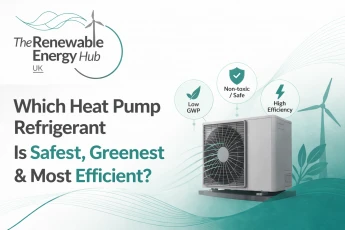
High temperature heat pumps in the UK tend to use CO2 (carbon dioxide), R290 (propane), or R32 (hydrofluorocarbon). CO2 and R290 are both natural refrigerants.
CO2 heat pumps work well at up to 100°C and have consistently shown that they can produce a hot water supply at 80°C even under varying ambient conditions. The CO2 refrigerant has the lowest global warming potential (GWP) of all refrigerants at just 1 and is non-flammable and has very low toxicity. This means that it is classified as a safety group A1 refrigerant and can be used safely in public settings such as supermarkets.
GWP (Global Warming Potential) is a measure of how much heat a greenhouse gas traps in the atmosphere relative to carbon dioxide (CO2), which has a GWP of 1.
R290 is similar to CO2 in that it is highly efficient and low toxicity and offers a low GWP of approximately 3. However, it’s often preferred to CO2 as it is better for retrofitting, requiring conditions that are more in line with traditional system design. R290 is environmentally friendly and energy efficient, and has a very low GWP compared to many conventional refrigerants. However, it is highly flammable (classified as A3), and must be installed with strict safety precautions.
R32 is also highly efficient and has a significantly lower global warming potential than R410A (another HFC refrigerant). One advantage that it has over R290 is that it is less flammable (classified as A2L, mildly flammable).
These refrigerants allow for advanced weather compensation, which means that ambient temperatures are monitored by your heat pump system and the water set-point or air temperatures in air source heat pumps are adjusted accordingly. When the temperature outside rises, your system lowers the flow temperature to increase efficiency. Conversely, when the temperature outside drops, your system increases the flow temperature to maintain the desired room temperature, while still operating at a high COP.

Here's a breakdown of how a high temperature heat pump works:
Heat Extraction:
Like all heat pumps, high temperature heat pumps absorb heat from the environment through and put it through a refrdgerant cycle.
Refrigerant Cycle:
The heated refrigerant is compressed to further increase its temperature and pressure.
Heat Transfer:
The high-temperature, high-pressure refrigerant then flows to a condenser where it heats the water circulating in your central heating system - radiators and/or underfloor heating.
Enhanced Components:
To reach higher temperatures, high-temperature heat pumps use advanced components - compressors and heat exchangers that can cope with the increased temperatures and pressures. High temperature heat pumps often use refrigerants with higher heating capacities, such as R290 or R32.
Optimised Control Systems:
Sophisticated control systems adjust operating parameters to optimise performance and efficiency, such as compressor speed, refrigerant flow rate, and defrost cycles.
The Role of Compressors Explained
Compressors are what's used to achieve the higher temperatures required for applications like heating water for radiators and underfloor heating systems.
The Role of Heat Exchangers Explained
High-temperature heat pumps use heat exchangers to transfer heat from the refrigerant to the desired medium (e.g., water, air). In a standard cycle, a heat exchanger absorbs heat from a source like the outside air or the ground, and then transfers it to the refrigerant, which is then compressed. The compressed refrigerant is then passed through another heat exchanger (condenser) where it releases its heat to the heating system.
The way a high temperature heat pump works can also be broken down into 5 distinct phases:
- Evaporation – the heat is absorbed and converted into a low pressure, low temperature gas.
- Compression – the gas is compressed to increase its temperature and pressure.
- Condensation – the gas is converted back to a fluid in the heat sink or cold plate to conserve heat energy (in heat pumps heat sinks are used to transfer heat from the refrigerant to the air or water to achieve the desired heating or cooling effect and cold plates can be used in the evaporator (for absorption of heat from the source) or condenser for (release of heat)).
- Heat Sink – the fluid travels through your central heating or underfloor heating system via the heat sink. It can also provide domestic hot water depending on the type of heat pump used.
- Expansion – the fluid returns to the expansion valves where it evaporates, and the temperature and pressure is reduced which restarts the cycle.
Find a local installer
Welcome to the biggest directory of UK renewable energy companies
What is a Cascade High Temperature Heat Pump System?
A Cascade heat pump system is when two or more heat pump units work together to meet a building’s space heating or domestic hot water (DHW) needs. A cascade heat pump system can in fact consist of multiple interconnected heat pump units, each operating independently, harnessing heat from the surrounding environment, yet at the same time each is contributing to a cohesive system.
Individual heat pump units can be designed to operate at the same time for different tasks, for instance one heat pump unit might provide heating while another provides hot water. They can also share the property’s heating and hot water demand between them.
There is a key difference between cascade high-temperature heat pumps and standard cascade heat pumps. While both use multiple heat pumps working together, high-temperature cascades are specifically designed to produce higher output temperatures, often matching those of traditional gas boilers (60-80°C), whereas standard cascades may operate at lower temperatures suitable for heating alone.
This higher temperature capability of high-temperature cascades makes them suitable for applications requiring hot water or heating systems that cannot be easily adapted to lower temperatures.
Cascade high-temperature heat pumps use a two-stage system with different refrigerants to achieve a higher temperature lift. The first stage, a low-temperature cycle, evaporates and condenses refrigerant, transferring heat to a heat exchanger. This heat exchanger then serves as the evaporator for the second, high-temperature cycle, where another refrigerant evaporates and is condensed, further raising the temperature.
The cascade high temperature heat pump system uses two separate refrigeration cycles each with its own refrigerant and compressor. One cycle operates at a lower temperature and pressure, while the other operates at a higher temperature and pressure. The condenser of the low-temperature cycle acts as the evaporator for the high temperature cycle, facilitating heat transfer between the two stages. Each refrigerant is selected to be optimally suited for the temperature and conditions of its respective cycle. By working in tandem, the two cycles can achieve a higher temperature lift than a single stage heat pump.
Cascaded heat pumps only have a single control panel to manage the installation. When its warmer outside, only one heat pump needs to be working to heat the property efficiently. As it gets colder, the second unit may be required to supply either hot water or extra help with heating. Having just one control system means that heat and hot water requirements can be managed or split across two heat pumps. This helps them to operate as efficiently as possible. Sometimes one will be providing heating while the other one provides hot water. At other times both might only provide heating, or one may be switched off altogether.
The innovative configuration possible ensures scalability and a strong performance adeptly meeting the varied heating needs of large spaces.
If you live in a large property, your electricity supply might not be able to meet your heating and hot water needs via a single heat pump all year round. Most houses in the UK have what is described as a single-phase electricity supply. Single phase domestic heat pumps are generally designed to only deliver a maximum of about 12-14 kW of heating power. Cascaded heat pumps can offer a solution to this problem and be an ideal heating solution for your larger property and greater heat demand.
When it comes to bigger commercial property, they usually have three phase electricity supplies which allows them to use more electricity and larger heat pumps.
Many commercial properties with exceptionally high and/or fluctuating demand for heat and hot water will already have cascade boiler systems and for them, a cascade heat pump system could be an ideal route to decarbonisation.
The innovations in heat pump technology in recent years has allowed heat pumps to achieve higher heat output and broaden their application range.
Key Innovations Enabling Higher Output Temperatures:
Advanced Refrigerants:
One of the biggest changes has been the move towards newer refrigerants such as R290 (propane), which can operate more efficiently at higher temperatures while also having a much lower global warming potential.
Two-Stage Temperature Lift:
Another important development is the use of two-stage temperature lift systems. In simple terms, this means the heat pump compresses the refrigerant in two steps rather than one making it possible to heat low-temperature waste heat to higher temperatures for effective utilisation.
High-Temperature Air Source Heat Pumps (HTASHPs):
Modern high-temperature air source heat pumps are designed to deliver flow temperatures closer to those of traditional gas boilers. That makes them particularly suitable for older homes that may not perform well with lower-temperature systems.
Variable-Speed Compressors:
Instead of running at full output all the time, variable-speed compressors adjust to match demand. This improves efficiency and helps maintain more stable indoor temperatures.
Intelligent Control Systems:
Smart home integration and data analytics allow the system to adjust automatically as outdoor conditions change, maximising energy efficiency.
Extended Temperature Range:
Two-stage systems can widen the operating range significantly, in some cases lifting heat from 30–40°C sources to temperatures exceeding 160°C in industrial applications.
Heat Storage Integration:
Some systems also integrate heat storage within the cycle. This allows recovered heat to be reused, improving overall efficiency and reducing interruptions during defrost cycles.
Benefits of High Temperature Heat Pumps
- High efficiency levels: They are designed to work efficiently even in very cold weather or when facing high heating demands. Some models offer a consistent flow temperature of up to 70°C, even in outdoor temperatures as low as -15°C.
- More efficient than boilers: For many homeowners currently using a gas or oil boiler, high temperature heat pumps can work more efficiently, which may lead to lower energy bills and reduced carbon emissions, depending on tariffs and system design.
- Compatibility with existing systems: In many cases, there is no need to replace existing radiators or upgrade insulation, though this depends on the property. These systems tend to be easy to retrofit as you usually won’t need to make any changes to your building’s existing infrastructure.
- Versatility in hot water production: For households that rely heavily on hot water, this can be a practical advantage.
- Faster heating times: High temperature heat pumps can heat rooms and water faster than low temperature heat pumps, making your home more comfortable faster. This can vary by system design, sizing and controls.
- Reduced environmental impact: They are more environmentally friendly For many homeowners currently using a gas or oil boiler… to fossil fuel boilers. By using electricity rather than burning fossil fuels on site, high temperature heat pumps can reduce direct carbon emissions, particularly as the grid continues to decarbonise. Some models use natural refrigerants, making them an eco-friendly choice.
- Lower energy bills: Because they produce more heat per unit of electricity used, running costs can fall over time although this depends heavily on tariffs and system design.
- Comfort and consistency: In practical terms, that means fewer cold spots and more stable indoor temperatures during winter.
- Smart grid connections: Some high temperature heat pumps are cloud-ready and can connect to the user’s Wi-Fi. They feature smart grid connections that can integrate with solar PV systems to help optimise energy use, which may appeal to households looking to lower their environmental impact.
Limitations and Challenges of High Temperature Heat Pumps
- Higher initial cost: High temperature heat pumps tend to cost more to buy and install than standard heat pumps. They can cost between £11,000 and £20,000+, but homeowners may be eligible for a £7,500 grant through the Boiler Upgrade Scheme.
- Higher running costs: High temperature heat pumps typically use more electricity than low temperature models. This is because they require more power to achieve higher flow temperatures. They can hold higher temperatures in winter, but the colder the outdoor air, the more electricity the system will use, and as a result energy bills can be higher.
- Reduced efficiency: The Coefficient of Performance (COP) indicates a heat pump’s efficiency; the amount of heat produced per unit of electricity used. While modern high temperature heat pumps have improved COPs, low temperature models generally have higher COPs due to lower working temperatures. High temperature units operating at 60°C–80°C require more energy than those operating at 35°C–55°C. Some models may experience reduced efficiency in extremely cold weather, though weather compensation controls can help mitigate this.
- Complex installation: As with any heat pump system, changes may need to be made to existing pipework and/or radiators during the installation. Outdoor space is also needed for the unit. These units should not be installed in confined spaces, as a lack of proper airflow can reduce the efficiency of the heat pump and cause frost buildup.
- System sizing and expertise: Specialist knowledge is required to ensure the system is sized correctly. Poor sizing or placement can reduce the efficiency of the heat pump and increase costs. Qualified engineers should be employed for the installation of the system and future maintenance.
- Heavier weight: High temperature heat pumps are often larger and heavier than standard models, making placement and installation more difficult.
- Refrigerant considerations: Some units use R290 (propane), a natural refrigerant with low GWP but high flammability. These units must be positioned with care to avoid hazards. R290 systems also operate at higher pressures. CO2 (R744) is another natural refrigerant that operates at very high pressures to deliver the required heat output. This technology may be better suited to low-energy homes with a balanced demand between heating and hot water.
- Environmental impact of electricity: If the electricity used to operate the pump is generated from fossil fuels, environmental benefits may be reduced. Ongoing work to decarbonise the grid should improve this in the future.
- Maintenance requirements: Like all heating systems, heat pumps need periodic maintenance, including refrigerant checks, cleaning, and filter changes, to ensure longevity and performance.
- Noise: Heat pumps can generate noticeable noise, particularly at higher loads or in cold weather. Proper installation can help minimise this.
- Thermal storage: While capable of high output, pairing high temperature heat pumps with hot water cylinders or thermal stores can achieve the best performance as well as reduce running costs.
- Malfunctions: Heat pumps can experience issues such as refrigerant leaks, sensor faults, or compressor failures. Regular servicing can reduce the likelihood of such problems.
Where do High Temperature Heat Pumps make most sense?
High temperature heat pumps are suitable for varied applications, such as:
- Older buildings with traditional radiators: High temperature heat pumps are designed to deliver higher heat outputs making them ideal for retrofitting into existing heating systems without requiring major changes.
- Homes with insulation challenges: They can offer a feasible solution for homes where insulation upgrades are not practical due to building restrictions or cost.
- Domestic hot water needs: These systems are a good option for homes where it’s not possible to have a separate hot water system, as they can produce hot water in addition to space heating.
- Heritage and Listed buildings: Heritage and listed buildings often cannot have external or internal wall insulation added due to aesthetic or structural restrictions making high temperature heat pumps a good fit for them.
- Rented accommodation: For landlords, these systems can offer a quick and less disturbing installation for tenants, as they can often operate with minimal changes to existing heating systems.
- Replacement of fossil fuel boilers: They can provide an alternative to traditional fossil fuel heating in homes not connected to the gas grid, particularly when there are insulation challenges.
- Buildings requiring heat demand above 65 degrees centigrade: These systems are well-suited for buildings with heat demands above 65°C. These heat pumps can operate at temperatures typically found in traditional boilers. High-temperature heat pumps are specifically designed to deliver water at temperatures ranging from 60-80°C. This output is sufficient for domestic hot water and heating in many buildings, including those with standard radiators.
- District heating networks: They can be used to supply heat to both older and newer buildings within the same network.
- Industrial processes: High temperature heat pumps are suitable for various industrial processes that require higher heat output, such as drying, cleaning, and sterilisation.
- Commercial buildings: They are a good option for commercial buildings particularly when energy costs are a concern.
- Healthcare and leisure venues: High temperature heat pumps can provide hot water for these large facilities.
- Buildings in colder climates: They are dependable in colder climates, offering consistent high temperatures even in low outdoor temperatures.
Different Formats of High Temperature Heat Pumps
Air to water vs ground-source:
The installation of air to water high temperature heat pumps is relatively simple and less expensive than the installation of high-temperature ground-source heat pumps. Air to water heat pumps have a smaller footprint as they only require a single outdoor unit making them ideal for smaller homes, flats or properties where space is limited. The installation of ground-source heat pumps is more complex and expensive, requiring digging or drilling to install a ground loop or boreholes. They are best suited for larger homes with ample outdoor space or properties where deep boreholes are feasible.
Air to water heat pumps can be less efficient in very cold climates when compared to ground-source heat pumps. The greater efficiency of ground-source heat pumps is due to the more consistent temperature of the ground.
An air to water heat pump is a low carbon alternative to traditional heating systems while ground-source heat pumps offer a highly efficient and renewable energy source with minimal on-site emissions making them an even better option for the environment.
COMPARE PRICES FROM LOCAL INSTALLERS
Compare prices from local companies fast & free
Enter your postcode to compare quotes from leading professionals. We promise to keep your information Safe & Secure. Privacy Policy
Hybrid heat pump systems:
Hybrid systems combine a high temperature heat pump with a traditional boiler (gas or oil). The heat pump typically runs first to provide heat, and the boiler starts working when the heat pump’s output is insufficient or when the outside temperature drops below a certain point. These systems can be either ‘bivalent’ (using any heat pump and any boiler) or ‘purpose built’ (where the heat pump and boiler are designed and manufactured together).
There are 3 main advantages to these systems.
- Heat pumps are more efficient than boilers at lower temperatures so they can handle a large part of the heating load.
- By using the heat pump primarily, the hybrid system reduces reliance on fossil fuels which contributes to lower carbon emissions.
- In very cold weather, the boiler can provide additional heat ensuring a consistent heating output.
If you opt for a hybrid system, it’s important to bear in mind that it may have a higher initial cost than a standalone boiler. The installation process can also be more complex than a simple boiler replacement, but it can be relatively straightforward with a high temperature heat pump.
Monobloc vs split systems:
Monobloc high temperature heat pumps offer a simplified, all-in-one system with components including the compressor, heat exchanger and controls housed in a single outdoor unit whereas split systems have separate indoor and outdoor units. The outdoor unit contains the compressor and heat exchanger, and the indoor unit is often located in the utility or boiler room.
Monobloc systems are typically easier and quicker to install due to their simpler design as it only involves connecting the outdoor unit to the existing system while split systems can be more efficient in certain situations such as extreme weather conditions and offer greater flexibility for installation. The monobloc system operates with water, not refrigerant, inside the home which eliminates the need for specialised F-gas qualified engineers. F-gas qualified engineers may be required for split systems due to the use of refrigerant.
The monobloc’s single unit design frees up space indoors that would otherwise be needed for an indoor unit in a split system. Monobloc systems are usually cheaper than split systems making it a good choice for budget-conscious homeowners. Monobloc systems are generally more affordable for initial installation than split systems.
Domestic vs Commercial/industrial scale:
Domestic high temperature heat pumps are designed for individual homes offering heating and cooling at higher temperatures than standard heat pumps.
Commercial/industrial scale heat pumps are built for large buildings and industrial processes which require greater capacity, durability and efficiency. Commercial/industrial heat pumps handle larger spaces and higher demands than domestic units, often using multiple units for large-scale heating and cooling. Commercial units are more robust and may require more complex installation and maintenance than domestic models.
While both types offer high efficiency, commercial/industrial heat pumps can be used in industrial processes like drying, cleaning, and sterilisation, as well as for space heating in commercial buildings.
Efficiency and Performance Metrics
The performance of heat pumps is measured using metrics like COP (Coefficient of Performance) and SCOP (Seasonal COP), with high-temperature models typically achieving COPs between 3 and 4, and SCOPs above 3.5.
Here are some of the performance metrics used:
- COP (coefficient of performance): This measures the ratio of heat output to electrical energy input. High-temperature heat pumps generally have COPs between 3 and 4, meaning they produce 3 to 4 units of heat for every unit of electricity used. A high-temperature heat pump with a COP of 3.5 means that for every 1 unit of electricity it consumes, it produces 3.5 units of heat. This translates to a significant reduction in energy costs compared to a gas boiler with a COP of 0.9.
- SCOP (Seasonal Coefficient of Performance): This measures the overall efficiency of the heat pump over an entire heating season. High-temperature models typically have SCOPs above 3.5, indicating good seasonal efficiency.
- HSPF (Heating Seasonal Performance Factor): This metric, alongside SEER (Seasonal Energy Efficiency Ratio), helps assess a heat pump's overall performance over a heating or cooling season.
- SEER (Seasonal Energy Efficiency Ratio): This measures the cooling efficiency of the heat pump over a cooling season.
How temperature settings affect efficiency
In high-temperature heat pumps, lower flow temperatures generally lead to higher efficiency. While high-temperature heat pumps are designed to work at higher temperatures, modern systems often utilise lower temperatures in practice, achieving similar efficiency to low-temperature models. This is because homes can often be sufficiently heated at lower temperatures, especially with features like weather compensation.
Find a local installer
Welcome to the biggest directory of UK renewable energy companies
Factors Affecting Efficiency
- Reduced compressor workload: In theory, high temperature heat pumps have lower efficiency due to the compressor working harder to reach higher temperatures.
- Weather compensation: Many high temperature heat pumps are equipped with weather compensation, which adjusts the flow temperature based on outdoor conditions. This means the heat pumps can work at lower temperatures during milder weather, maximising efficiency.
- Home suitability and insulation: Many homes are well-suited to lower heating temperatures. Proper insulation helps to maintain a stable indoor temperature, reducing the amount of heat the heat pump needs to produce.
- Innovative refrigerants: Modern refrigerants like R290 (propane) and R744 (carbon dioxide) help to narrow the efficiency gap between high and low-temperature heat pumps.
- Flow temperature: Lowering the flow temperature generally increases efficiency, as it reduces the amount of work the compressor needs to do.
- Thermostat settings: Maintaining a consistent, comfortable temperature is vital for efficient operation. Avoid cycling the heat pump on and off, as this reduces efficiency.
- Radiator size and type: Smaller radiators may require higher flow temperatures to achieve the desired heat output, potentially reducing efficiency.
- Weather conditions: Outdoor temperature fluctuations can impact the heat pump's efficiency, with colder temperatures generally requiring the heat pump to work harder.
While high-temperature heat pumps can reach higher temperatures, they are not necessarily built to operate at these temperatures all the time. By utilising features like weather compensation and adjusting flow temperatures, they can achieve similar or even higher efficiency than low-temperature heat pumps, especially in homes with good insulation and appropriately sized radiators.
Smart Control Integration
Smart control integration for high-temperature heat pumps gives homeowners the tools to get the most out of their heating systems from anywhere, at home, at work or on holiday, helping to keep the home comfortable and energy efficient.
Homeowners can use smart thermostats, voice control integration and app-based management to change temperatures, set schedules and keep an eye on energy use.
Smart Thermostats
- Preset schedules: Users can set heating and cooling schedules to save energy and improve comfort.
- Remote control: Users can change temperature and settings remotely via a smartphone app.
- Connected smart home: Some smart thermostats can be linked with popular smart home hubs (e.g., Apple HomeKit, Google Home) for more central and convenient control.
- Weather sensitive control: Smart thermostats can use weather data to automatically alter thermostat settings for efficient use of energy.
Voice control
- Hands-free function: Users can use voice commands to control heat pump settings, for convenience and ease of use.
- Smart automation: Voice assistants can learn user routines and responses and adjust heating preferences automatically.
App Based Management
- Remote access: Users can observe and control their heat pump from anywhere using a smartphone app.
- Detailed monitoring: Apps can provide users with important information about energy consumption, system performance, and temperature settings.
- Customisable settings: Users can set up schedules and preferences to suit their household needs.
Here are some of the benefits of Smart Control
- Greater comfort: Homeowners can use smart controls to ensure they have a consistently warm and comfortable home. Heating schedules can be pre-programmed by the user or the system can be left to learn and adapt to the user’s daily routines.
- Less energy waste: By making the best use of the energy produced by the heat pump system, smart controls can improve efficiency, lower energy bills and reduce environmental impact.
- Improved efficiency: Smart controls can automatically alter the heat pump’s output based on the outdoor temperature, reducing energy waste which can lead to lower energy bills. They can also learn user routines and alter schedules, as needed, allowing for the desired temperature to be reached.
Smart controls can tailor temperatures room by room allowing for efficient, targeted heating that reduces energy consumption.
- Convenience: Smart controls are easy to use enabling users to manage their heat pump from anywhere with an internet connection. Smart systems can oversee their own performance and let users know about any potential problems before they become serious. Early identification of problems can support long-term system performance. Smart controls are designed with the user in mind including easy to understand interfaces and often allowing for settings to be made remotely.
- Energy bill savings: Smart controls can reduce energy consumption and lower energy bills by making the best use of the energy produced and heating only when needed. They can help increase the heat pump's efficiency, especially when high temperatures are required. Some smart controls can make heat pump operation even more efficient by taking advantage of time-of-use energy tariffs, further reducing costs.

Environmental impact of High Temperature Heat Pumps
One of the main environmental advantages of a high-temperature heat pump is that it doesn’t burn fuel on site. Instead, it moves heat that already exists in the air, ground or water into your home. This is very different to traditional heating systems that burn fossil fuels which release greenhouse gases. High-temperature heat pumps (HTHPs) help cut the emissions associated with home heating by transferring heat rather than burning fossil fuels. The degree to which carbon emissions are reduced will vary depending on factors like the type of heat pump, the electricity grid's carbon intensity, and the application.
How much carbon is saved depends largely on where your electricity comes from. As the UK grid continues to decarbonise, heat pumps become progressively cleaner to run. Even on today’s electricity mix, studies from organisations such as the International Energy Agency (IEA) suggest heat pumps can reduce COâ‚‚ emissions significantly compared with gas boilers in some cases by up to 80%, depending on location and system design.
Some studies have shown that for an average three-bedroom home, switching from a gas boiler to a heat pump could reduce annual carbon emissions by around 1,900 kg, although this will vary depending on heating demand and insulation levels.
High-temperature models work in the same way as standard heat pumps but can deliver higher flow temperatures where needed. When paired with renewable electricity, such as solar PV, operational emissions can fall even further.
Heat pumps are considered a vital technology for achieving net-zero emissions targets, as they offer a significant and readily available path to decarbonising heating systems. The International Energy Agency (IEA) reports that heat pumps can reduce greenhouse gas emissions by at least 20% compared to gas boilers, even in countries with higher carbon intensity electricity grids.
Refrigerant choice also plays a role. Modern systems increasingly use lower Global Warming Potential (GWP) refrigerants such as R290 (propane) or R744 (COâ‚‚). These reduce the environmental impact in the unlikely event of refrigerant leakage and improve the overall lifecycle profile of the system.
When assessing environmental impact, it’s important to look at both operational emissions (how the system performs day to day) and embodied carbon (the emissions associated with manufacturing and installation). Although heat pumps can have higher upfront embodied carbon than a boiler, their lower operational emissions typically result in a smaller overall carbon footprint over their lifetime.
What Affects a Heat Pump’s Carbon Footprint?
Several factors influence the overall environmental impact:
- Electricity Grid Mix: The cleaner the electricity supply, the lower the operational emissions.
- System efficiency (Coefficient of performance/COP): Higher COP high temperature heat pumps will have a lower operational carbon footprint. In other words, more efficient systems use less electricity to produce the same heat output.
- Heating Demand: Larger or poorly insulated homes require more energy.
- Location and Climate: Colder regions may increase electricity use during winter peaks.
- Maintenance and Service: Well-maintained systems operate more efficiently over time.
Installation and Operational Costs of a High Temperature Heat Pump
High-temperature heat pumps generally have a higher upfront cost than low-temperature heat pumps and gas boilers, but they may offer lower operational costs in the long run. Gas boilers are typically the least expensive upfront, but their operating costs can be higher, especially with rising electricity prices. Low-temperature heat pumps offer a middle ground in terms of upfront and running costs.
The cost of installing a high temperature heat pump can be considerably more expensive than either low temperature heat pumps or gas boilers. High temperature heat pumps can range from £12,000 to £44,000, whereas the cost of installing a low temperature heat pump ranges between £2,400 to £14,000 or a gas boiler can range from £1,000 to £4,000.
High temperature heat pumps may have lower running costs compared to low-temperature heat pumps due to higher efficiency and the reduced need for supplementary heating. Low temperature heat pumps may be slightly more expensive to run than gas boilers, especially with current electricity prices, but may offer long-term savings as electricity prices change. The operational costs for gas boilers are higher than for heat pumps, especially if electricity prices rise.
Factors Affecting Costs
- Size of the property: Larger homes will generally require larger and more expensive units.
- Existing heating system: Adapting an existing system for a heat pump can add to the cost.
- Government grants: Grants can help offset the higher upfront cost of heat pumps. Homeowners in England and Wales may be eligible for a heat pump grant of £7,500 towards the initial cost of a high temperature heat pump installation, through the Boiler Upgrade Scheme.
High-temperature heat pumps offer significant long-term savings potential due to their high energy efficiency, potentially reducing heating bills by hundreds of pounds per year. While the initial investment might be higher than traditional systems, the lower ongoing operating costs over the heat pump's lifespan can offset this difference, especially as energy prices rise.
Factors Influencing Savings
- Size and Insulation of the Home: The size of your home and its insulation levels will impact how much heat is required, affecting energy consumption.
- Local Climate: High-temperature heat pumps are designed to operate efficiently in a wider range of outdoor temperatures than standard models, potentially offering more consistent savings.
- System Maintenance: Regular maintenance is important to ensure the heat pump continues to operate efficiently and maximise its potential savings.
Retrofitting High Temperature Heat Pumps into Existing Homes
Retrofitting high-temperature heat pumps into existing homes requires careful planning and professional installation, with a focus on ensuring the heat pump's efficiency and the home's overall energy performance.
What’s involved in the retrofit
Assess your home:
- Energy Audit: A professional energy audit is vital to identify areas of heat loss and determine the appropriate size and type of heat pump for your home.
- Insulation: Poor insulation can significantly reduce the efficiency of a heat pump. Focus on improving insulation in walls, roofs, and floors.
- Existing Heating System: Consider whether you need to upgrade radiators or replace your existing heating system to be compatible with the heat pump.
- Space: Ensure there is sufficient space for the heat pump unit, both indoors (basement, boiler room) and outdoors.
Choose the right heat pump
- Sizing: A correctly sized heat pump is crucial for efficiency. Installers should calculate the size based on your home's needs and existing insulation.
- High-Temperature: High-temperature heat pumps can provide hotter water and can be suitable for existing radiators or underfloor heating.
- Type: Consider air-to-water heat pumps or ground source heat pumps, depending on your property and needs.
Prepare your home
- Insulation: Improve insulation levels in walls, roofs, and floors to minimize heat loss.
- Draught-Proofing: Ensure windows and doors are properly sealed to prevent drafts.
- Radiators: You may need to upgrade your radiators to larger ones or to those better suited for low-temperature systems.
- Underfloor Heating: Consider installing underfloor heating, which can be more efficient with a heat pump.
- Water Heating: Consider upgrading your hot water tank to a more efficient model or explore options for direct hot water from the heat pump. High-temperature heat pumps typically require a specific type of hot water cylinder to ensure efficient heat transfer and prevent excessive pressure loss.
These cylinders need a large surface area coil to handle the higher flow rates and temperatures from the heat pump. Existing cylinders might need replacement, especially if they don't have a coil large enough to accommodate the heat pump's output. The size of the hot water cylinder should be appropriate for the household's hot water usage. Cylinders can usually fit in cupboards with a footprint of 80cm x 80cm or larger.
Installation
- Professional Installer: Use a qualified and certified installer to ensure proper installation and system configuration.
- Contract: Have a detailed contract in place with the installer outlining the scope of work, responsibilities, and costs.
- Monitoring: The installer should provide monitoring and maintenance services after installation.
Other factors to consider
- Planning Permission: Check with your local council to see if you need planning permission for your installation.
- District Network Operator (DNO): Your installer will usually help you notify the DNO of your heat pump installation.
- Hybrid Systems: Consider using the heat pump in conjunction with a traditional boiler (hybrid system) for backup heating.
High-temperature heat pump installation typically takes 2-5 days, depending on complexity. Modifications may include removing existing heating systems and potentially adjusting pipework or radiators. The amount of time it takes for the installation can vary based on factors like property accessibility, existing ductwork, and electrical requirements.
Annual servicing by a qualified engineer is recommended, especially after the initial installation. Basic checks required include cleaning or replacing filters, cleaning coils and fans, ensuring proper airflow, and checking for leaks. Professional servicing Includes checking ducts for leaks, inspecting filters and coils, measuring airflow, checking refrigerant levels, and verifying reverse heating/cooling controls.
Many installations include a 5-year warranty on the heat pump, and potentially a longer warranty if you opt for a service plan. Some warranties require annual servicing to remain valid. Warranties may cover parts and labour for repairs within the warranty period, but specific terms should be reviewed with your installer.
Top Manufacturers and Leading Models of High Temperature Heat Pumps
Daikin: Daikin is known for its high-quality and efficient heat pumps, with models like the Daikin Altherma 3H HT being popular choices. The Daikin Altherma 3H HT is particularly well-suited for colder climates and can operate effectively at high temperatures.
Mitsubishi: Mitsubishi offers a range of heat pumps, including their Ecodan range, which is known for its reliability and efficiency.
Viessmann: Viessmann is a well-established brand with a reputation for energy-efficient and reliable heat pumps, such as the Vitocal series. Viessmann's Vitocal series is designed to be energy-efficient and compatible with existing heating systems.
Samsung: Samsung offers a variety of heat pumps, including their EHS Monobloc, which is known for its efficiency and compact design.
Vaillant: Vaillant is a major player in the heating industry. Vaillant's aroTHERM Plus is a popular choice for its high performance.
LG: LG's Therma V series is well-regarded for its energy efficiency and quiet operation.
Conclusion
Heat pump technology is evolving towards greater efficiency and integration with other energy sources, including hydrogen, to reduce carbon footprints and meet diverse heating needs. High-temperature heat pumps in particular are gaining traction for applications requiring higher output temperatures and can potentially be used with hydrogen.
In summary, high-temperature heat pumps offer a viable and efficient heating solution, particularly for older buildings and colder climates, without the need for extensive upgrades. They can be a cost-effective and environmentally friendly alternative to traditional heating systems.
High temperature heat pumps are not just an alternative heating solution; they represent a significant step towards a more sustainable and environmentally responsible energy future.
Their ability to capture and utilise waste heat, coupled with their versatility in various applications, makes them a powerful tool for reducing fossil fuel reliance and mitigating climate change. As technology advances and high temperature heat pumps become more widely adopted, they will play an increasingly important role in achieving a cleaner energy system.
Find a local installer
Welcome to the biggest directory of UK renewable energy companies
 How Does a Heat Pump Work? UK Guide 2026