.png)

Read Time : 6 Minutes
A Guide to Ground Source Heat Pumps in the UK
What is Ground Source Heating?
Ground source heating is one of the best options available when it comes to heat pumps. They are able to work efficiently throughout the year, no matter the weather, due to the fact that they are buried underground where temperatures remain relatively stable year-round. Heat pumps are no longer new technology, with an increasing number of people setting out to purchase and install them. Here is some of the key information you should know about ground source heating.
What is a Ground Source Heat Pump?
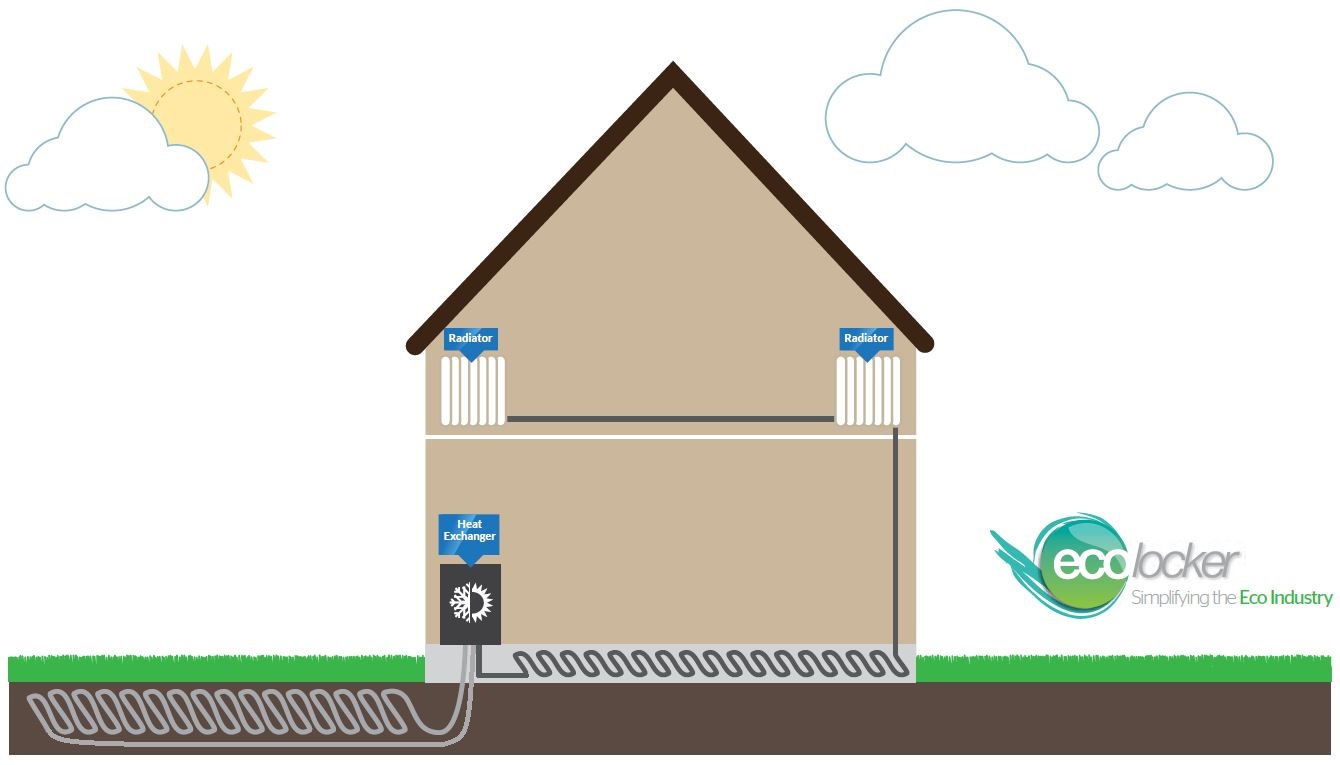
The thing that makes a ground source heat pump what it is, is the pipework and how it is laid out. Generally speaking, you will find that the system consists of tens to hundreds of metres of piping (often well over 100m) – all of which is buried in loops in trenches, or vertically in boreholes. Once the piping has been buried, it is possible to restore the surface of the ground so that it can be returned to use for its original function. This could be a field for growing crops, garden, or even a driveway. You will never even notice a pipe has been installed there.
COMPARE PRICES FROM LOCAL INSTALLERS
Compare prices from local companies fast & free
Enter your postcode to compare quotes from leading professionals. We promise to keep your information Safe & Secure. Privacy Policy
A Quick Guide to Ground Source Heat Pumps in the UK
A major renewable source of heat for homes can actually be found in the ground. One of the best methods of extracting and harnessing this valuable energy is a Ground Source Heat Pump (GSHP) which can be used for producing hot water for domestic use, showers and hot taps as well as for central heating systems and, occasionally, for operating warm air heating systems.
It sounds like a simple solution to all your heating problems but there are a few caveats you need to consider before you take the heat pump plunge.
How Does a Ground Source Heat Pump Work?
The way in which this system works is actually very simple. It starts with a liquid, usually a water and antifreeze mixture, being pumped through the piping. As a side note, biodegradable options of this liquid are available. The liquid works to help absorb the warmth that is naturally found in the ground.
Following this, a compressor that is found in the main unit of the heat pump will raise the overall temperature of the fluid before a heat exchanger transfers the heat to a separate body of water. Once this is done, it then circulates around the central heating system and the water, which is now cooled, is pumped back out to the buried piping. After this, the cycle continues to repeat itself in order to keep your home warm.
Ground Source Heat Pump Systems
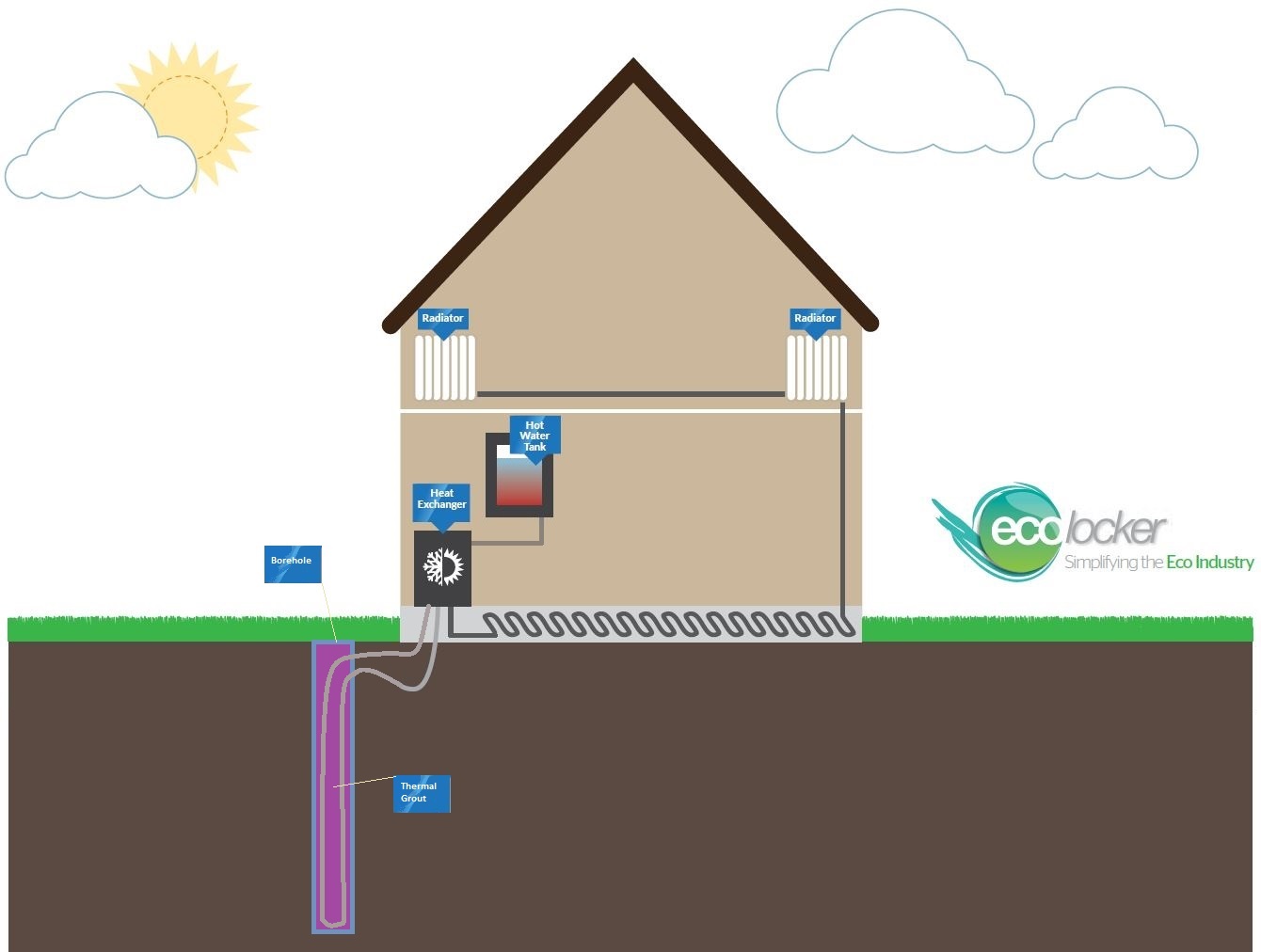
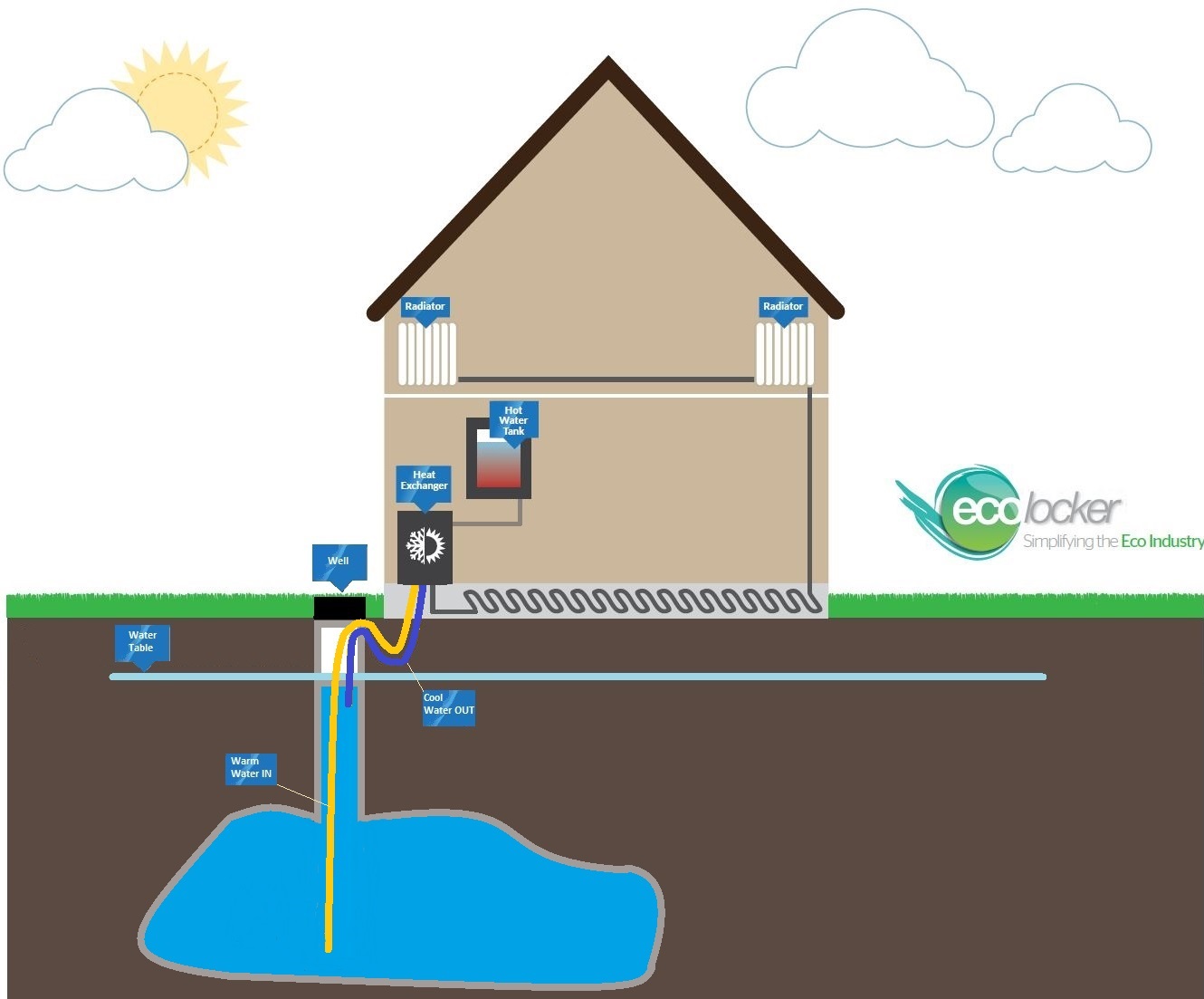
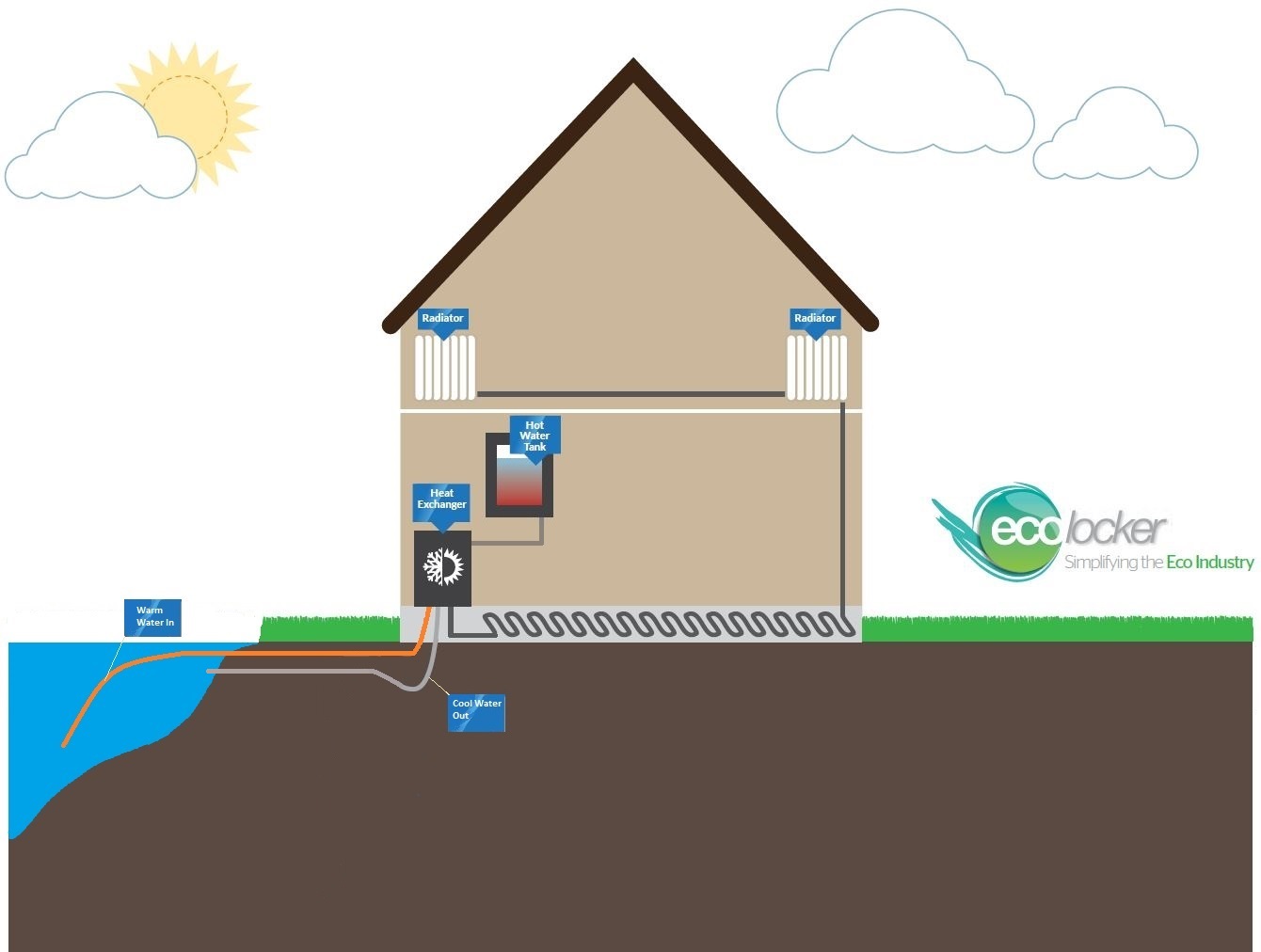
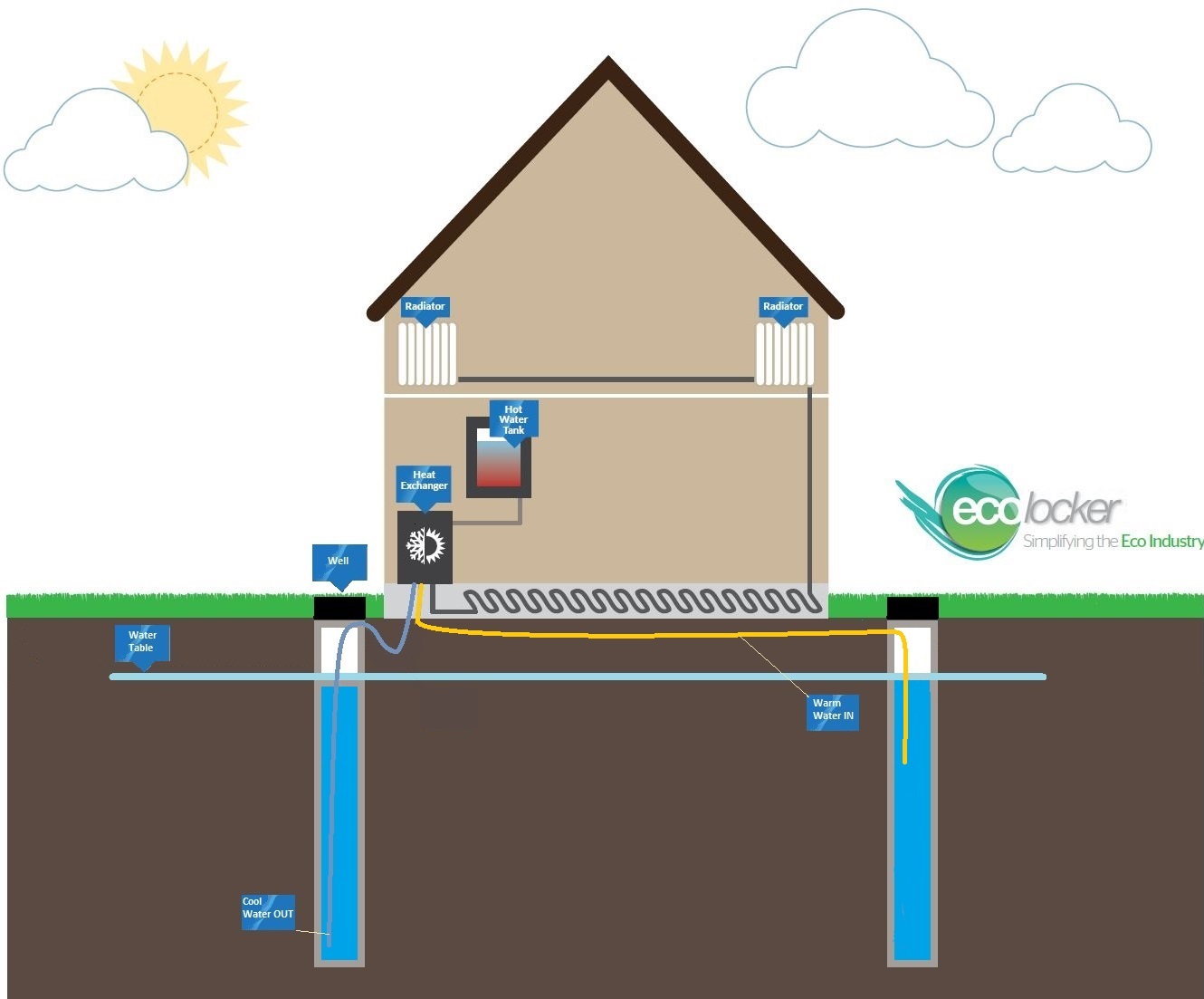
There are two main types of ground source heat pump that you can have installed at your property. These are known as the horizontal and vertical systems. Which of these you have installed depends on the amount of space that is available to you, as both are installed underground.
The horizontal system tends to be laid in a shallow trench over a much wider surface area than its vertical counterpart. If you have a large amount of space, then this is a great option to go for. However, if you find yourself a little short on space, then there is no need to worry. The vertical system uses a borehole (or boreholes) to ensure the pipes are securely buried. These tend to be anywhere from 15m to over 100m deep, depending on ground conditions and system design. It really depends on what you need for your home.
It is essential that you remember to make sure the system you use is the correct size for your home and personal needs, regardless of the system you will be using.
 |
 |
 |
Single Borehole Closed Loop GSHP |
Single Borehole Closed Loop GSHP |
Single Well Open Loop WSHP |
 |
 |
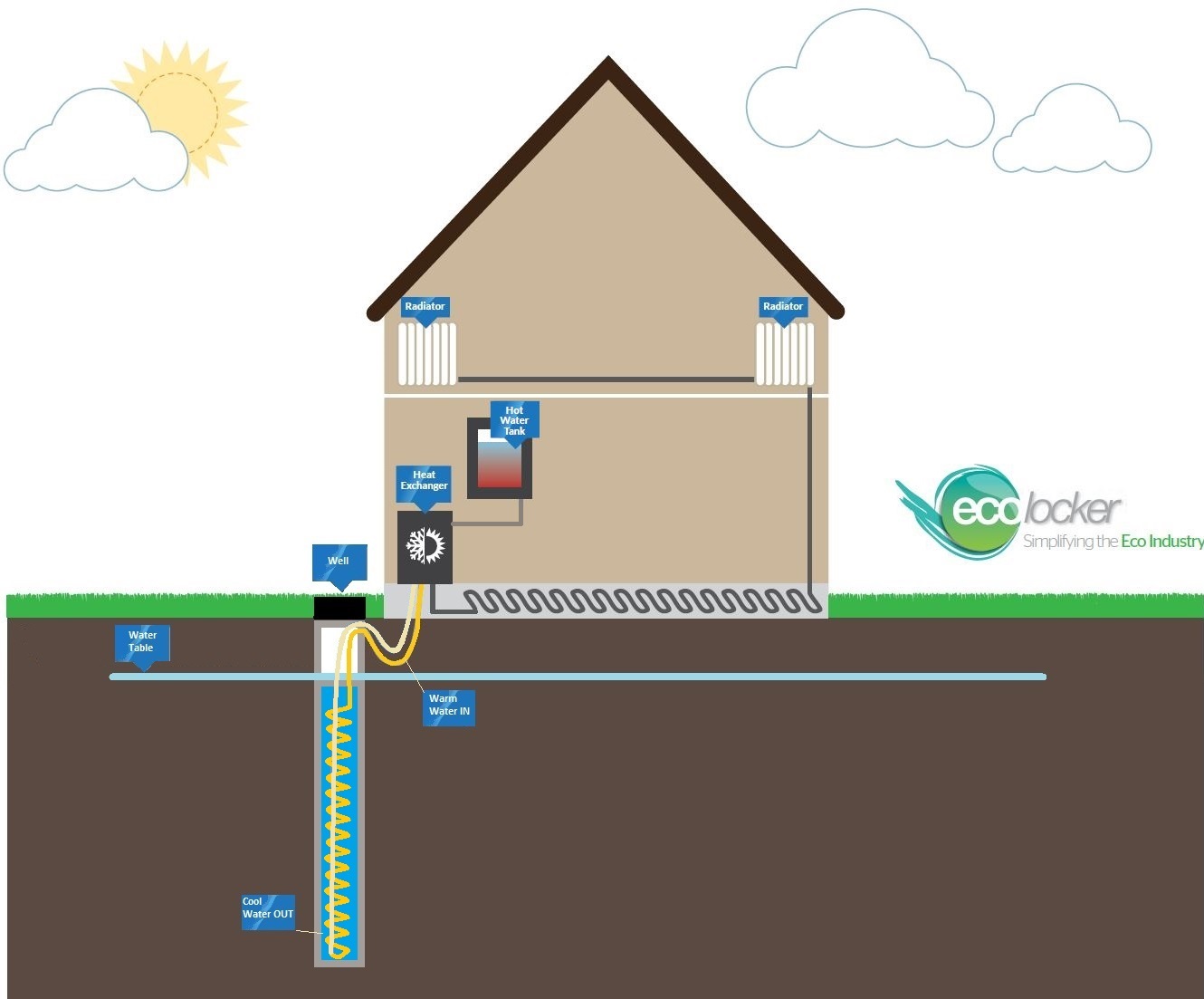 |
Lake or Pond Source Open Loop WSHP |
Open Loop Dual Well WSHP |
Closed Loop Single Well GSHP/WSHP |
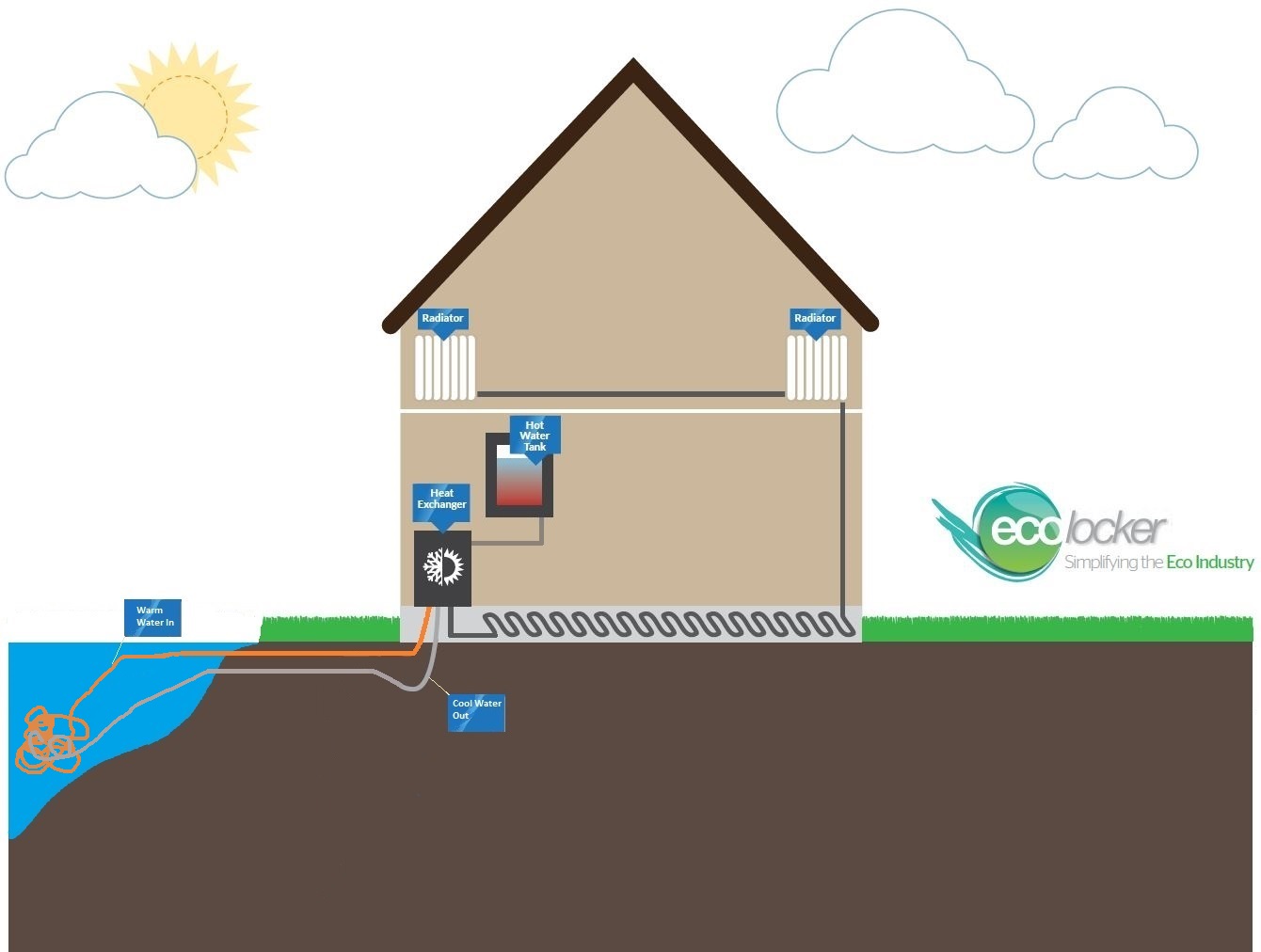 |
||
Closed Loop Water Source GSHP/WSHP |
Benefits of Ground Source Heat Pumps
- If you use it to replace your conventional heating, either by gas or electric boiler, it can dramatically reduce your energy bills. How much you will save will depend on the initial cost of installation and the type of fuel source being replaced.
- You might be able to benefit from the government’s Boiler Upgrade Scheme (BUS) which offers homeowners a grant of £7500 to help towards the upfront costs. The BUS is available in England and Wales for eligible properties and installations. You don't have to pay this money back and it's simple and easy to receive provided the property and system meet the scheme rules.
- Although it is also dependent on the type of fuel you are replacing, you could significantly reduce your carbon emissions and contribute to halting global warming.
- Ground Source Heat Pumps (GSHPs) are very low maintenance and easy to run once installed, providing heat for radiators and hot water.
- The pumps deliver heat at much lower temperatures than normal gas or electric systems, so you may have to have them on for longer periods.
- GSHP systems offer the most efficient solution for heating your home or business.
- GSHP systems have a long lifespan, with the heat pump unit typically lasting 20–25 years and the ground loop often lasting 40 to 50 years or more.
The Disadvantages of Ground Source Heat Pumps
- GSHPs require significant outdoor space or borehole access, which makes them unsuitable for many urban or smaller properties.
- Heat pump systems have relatively high initial purchase costs, even after grants
- GSHPs typically have longer payback periods than air source heat pumps, especially when replacing mains gas.
- Installation can be complex, especially as site surveys and heat loss calculations must be undertaken in order to understand local ground conditions, geology, as well as the heating and cooling requirements for your household
- Some of the fluids used for heat transfer (typically water-based antifreeze solutions) raise environmental concerns if incorrectly handled, and it is recommended to use biodegradable, low-toxicity fluids
- The installation process can mean a great deal of work and disruption to your house as well as your garden. Work will be undertaken on the actual building, including penetration of the walls
- Electricity is required to run the heat pumps, which means that they will never be entirely operationally carbon neutral unless your energy supplier generates electricity through renewable means
- Special planning permissions can be required in Wales and Northern Ireland, whilst in England and Scotland, this can depend on local planning constraints, land use, and property status
GSHPs require:
- Heat loss calculations
- Ground condition assessment
- Access planning
- Loop sizing
Deciding if a Ground Source Heat Pump is for You
There are several things to consider before you decide to take on something like a Ground Source Heat Pump. First of all, your house needs to be well insulated. GSHPs produce heat at much lower temperatures than normal systems so you would be well advised to have sufficient floor, wall cavity and loft insulation as well as double glazing, to make sure all that heat is kept in. How you are going to heat your house is another area to think about carefully.
Ground Source Heat Pumps work better with things like underfloor or warm air heating rather than traditional radiators. Radiators can still be used but often need to be larger or upgraded to work efficiently at lower temperatures.
Finally, the ground needs to be suitable. You need to check if you can get diggers and drills into the garden as well as find out about the nature of the ground. For example, hard rock does not necessarily rule out vertical boreholes but can increase drilling cost and complexity.
Cost and ROI of a Ground Source Heat Pump in the UK
They are still relatively expensive, and you won’t start to see a return on investment until after a fair number of years. On average you will be spending around £18,000–£35,000 for an installation. You will still need to pay for electricity to run the pump and savings will depend on many factors, including the existing fuel and the heating system that you are replacing.
You may be eligible for the Boiler Upgrade Scheme which offers a grant of £7,500 for residential homeowners looking to install a GSHP system.
Check out our full guide to heat pump costs and savings here.
Alternatively, we have a short dedicated guide to GSHP costs here.
Getting Your GSHP Installed
Major work has to be undertaken if you want to install a Ground Source Heat Pump, including checking whether you need planning permission. Workmen and diggers (possibly even a crane) will need to be able to access the area where you are going to have the heat pump installed.
Remember, the first thing you need to consider, which may add cost to your conversion to a heat pump, is whether your house is ready for it – have you got the right central heating system installed and is your property insulated to a high enough standard? There are a number of companies that specialise in putting in heat pumps and they will be able to advise if your property and garden would suit such an installation.
You'll need to find a good, MCS accredited installation company to perform a full site survey and heat-loss survey. Not all properties are suitable, so make sure you're well-read on the technology before signing any contracts.
Check out our full installation walk through for Ground Source Heat Pumps (GSHP) Installation of a Ground Source Heat Pump
Maintenance
As with any mechanical or complex device, annual inspections are important. A qualified engineer should visit your property to do a full check and service of your GSHP. This will certainly improve the lifespan. That said, there are some things you can do yourself:
- Filter Changes: Replace air filters regularly, especially if they look dirty.
- Fluid Check: Check the levels of the antifreeze solution in closed-loop systems. Directions for this should be explained by your installation company.
- Electrics: Check that controls and connections are clean and tight.
Conclusion
In this article we've covered the basics of ground-source heat pumps. They certainly aren't cheap, but are most likely, the most efficient and sustainable heating system available on the UK market. Not really that applicable for a mid-terrace property in a city (never say never), but if you're on oil or LPG, in a larger property, then the return on investment can be very attractive and you're certainly future-proofing and doing your bit for the environment.
A major renewable source of heat for homes can actually be found in the ground. One of the best methods of extracting and harnessing this valuable energy is a Ground Source Heat Pump (GSHP) which can be used for producing hot water for domestic use, showers and hot taps as well as for central heating systems and, occasionally, for operating warm air heating systems. It sounds like a simple solution to all your heating problems but there are a few caveats you need to consider before you take the heat pump plunge.
For more information check out our articles:
Heat Pump information - Everything you need to know about heat pumps.
Different types of heat pumps - A detailed break down of the types of heat pumps that are currently available.
Alternatively, search for heat pump installers in your area here.
Find a local installer
Welcome to the biggest directory of UK renewable energy companies
 How Does a Heat Pump Work? UK Guide 2026