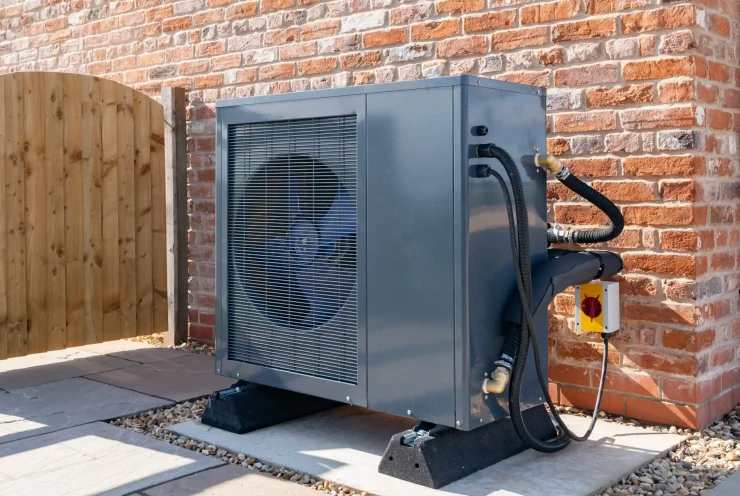
On paper, you’ve done everything right. You’ve invested in a state-of-the-art air source heat pump, optimised the settings, and committed to your home’s low-carbon future, yet something still feels off. The radiators never quite reach that comforting warmth, and your energy bills aren’t delivering the dramatic drop you expected. This disconnect is increasingly common in homes transitioning to renewable systems, and it points to a critical but often overlooked issue: the passive gap.
At the heart of every sustainable home is the concept of the thermal envelope. This is the physical barrier that separates conditioned indoor air from the outside environment. While active systems like heat pumps generate and distribute heat, they rely entirely on the integrity of this envelope to retain it. If that envelope is compromised, even the most advanced technology can’t compensate, resulting in higher energy costs and wasted performance.
And this is where the problem lies. In many homes, especially older properties, the garage door is one of the largest uninsulated surface areas. At roughly 15–20 square metres, a standard garage door behaves less like a barrier and more like a radiator, actively bleeding heat out of your home. This is particularly true in properties with integrated garages, where the door forms a direct interface between indoor living space and the external environment.
COMPARE PRICES FROM LOCAL INSTALLERS
Compare prices from local companies fast & free
Enter your postcode to compare quotes from leading professionals. We promise to keep your information Safe & Secure. Privacy Policy
What affects COP?
To understand why a cold garage impacts your heating bills, reviewing the Coefficient of Performance (COP) of your home’s heating or cooling system is a good start. This enables you to understand the factors that influence how efficiently heat is transferred relative to the energy consumed.
Temperature difference
The most significant factor is the temperature difference between indoors and outdoors. The greater this gap, the harder the system must work, and the lower its COP. In garages, which are often poorly insulated and subject to extreme temperatures, there is an increased load on adjacent living spaces to balance the discrepancy. System design also plays a role, as modern heat pumps and high-efficiency compressors typically achieve better performance than older or less advanced systems.
Heat exchange and airflow
Just as important is the efficiency of heat exchangers and airflow. Dirty coils, blocked vents, or inadequate ventilation can all reduce heat transfer efficiency. The condition and type of refrigerant, along with proper system maintenance, further affect performance, as even minor faults can increase energy consumption.
Insulation and airtightness
As core components of a thermal envelope, insulation, and airtightness, particularly in transitional spaces like garages, have a substantial indirect impact on energy efficiency. Reducing heat loss or gain helps maintain smaller temperature differentials, allowing the system to operate more efficiently and achieve a higher overall COP. This is why experts like Wessex Garage Doors emphasise the importance of choosing door configurations specifically engineered for thermal retention rather than just aesthetics.
Why seals and thermal breaks matter
Air leaks are rapidly becoming a defining metric for Energy Performance Certificates (EPCs) and it’s often where garage doors fall short. Even if you have insulated panels, if the sealing around the perimeter is broken or degraded, it can undermine performance. Even misaligned tracks can pose a problem.
Modern garage door engineering addresses this through two key innovations: improved sealing systems and thermal breaks. A thermal break is a non-conductive material, often a polymer, which is inserted between the inner and outer layers of a metal frame. This prevents heat from travelling directly through the structure, effectively interrupting the thermal bridge.
Without this feature, a metal garage door frame essentially acts as a conductor, transferring heat from the warm interior surface to the cold exterior. With a thermal break in place, your garage door becomes a genuine barrier rather than a conduit.
The ROI of the passive upgrade
Changing out your garage door might not have the sustainability appeal of installing solar panels or a new heat pump, but its impact on the overall system performance of your home can be profound. It creates what’s known as system harmony; in other words, it contributes to other components of your home, both active and passive, to ensure everything is working together efficiently.
When you reduce heat loss through the garage, you enable your heat pump to operate at lower flow temperatures more consistently. This improves COP and also reduces wear and tear on the system. Over time, this can extend the lifespan of the unit by several years, delaying costly replacement and improving long-term value.
There’s also a measurable impact on your home’s energy rating. As EPC regulations evolve to incorporate more granular assessments of thermal bridging and air leakage, features like insulated garage doors will play a more significant role.
Closing the loop
The transition to low-carbon living isn’t just about adopting new technologies. It’s about rethinking the home as an integrated system. A heat pump is only as good as the environment it sits in. If that space is compromised by a poorly performing garage door and thermal leaks, then even the most advanced renewable solution will struggle to deliver the energy and thermal comfort it was designed for.
Find a local installer
Welcome to the biggest directory of UK renewable energy companies