Renewable energy in buildings was once considered to be a green luxury, to be commended but not seen as essential. Solar PV, battery storage, and other on-site renewable technologies are no longer viewed as optional add-ons and instead have become a key part of a building’s financial performance, resilience, and long-term viability. Renewable energy installations are revolutionising property economics across both the residential and commercial sectors.
COMPARE PRICES FROM LOCAL INSTALLERS
Compare prices from local companies fast & free
Enter your postcode to compare quotes from leading professionals. We promise to keep your information Safe & Secure. Privacy Policy
Alanna Loder-Symonds, sustainability director at consulting firm EQONIC Sustainability, says that the advantages of renewable technology have become impossible to dismiss. Photovoltaic arrays, energy storage batteries, and comparable on-property generation systems now affect asset performance and market position.
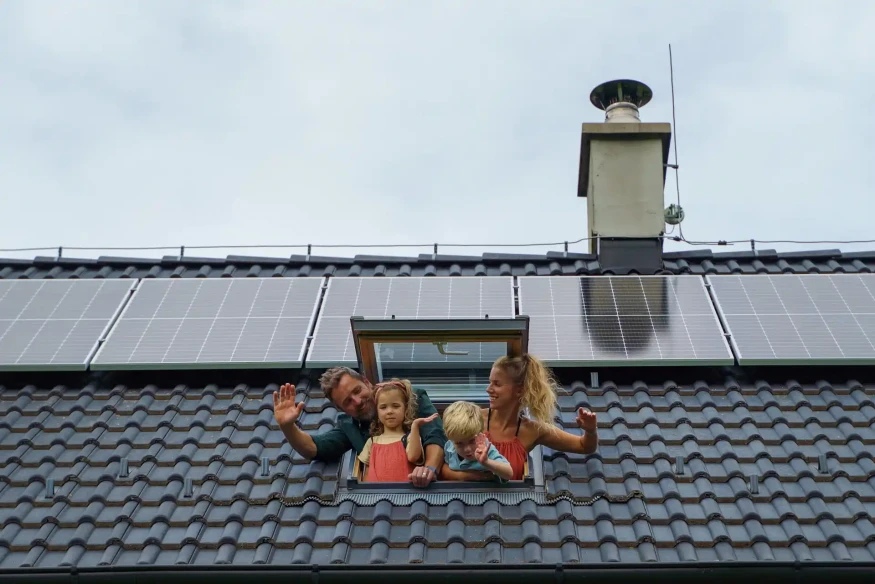
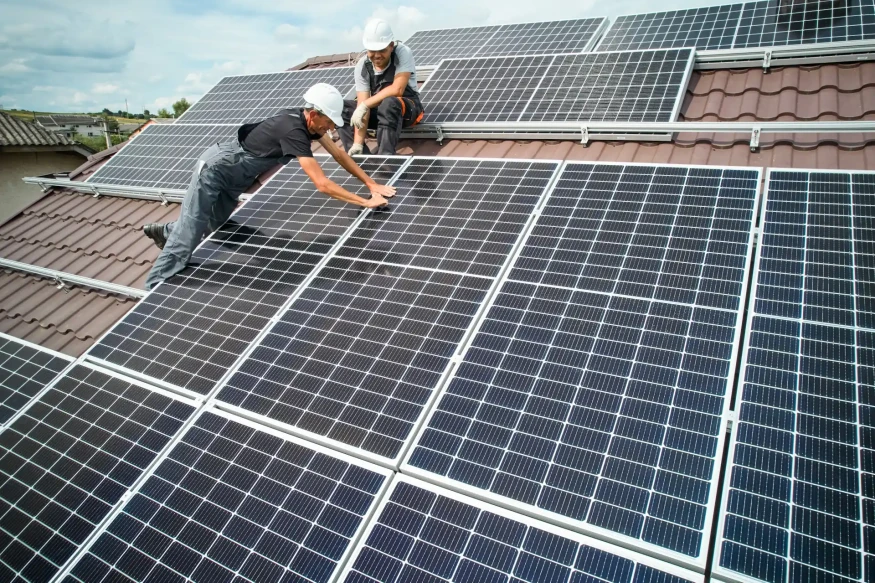
The upfront capital costs are the biggest challenge you will face when incorporating renewables into your residential or commercial building. It is not surprising that in an economic climate where capital budgets are tight that people hesitate before signing on the dotted line. After all, the expenses usually arrive before any savings are made. The cost to install a rooftop solar array for an average three-bedroom house is in the region of £5,000 - £9,000 with battery units adding an additional £3,000-£7,000.
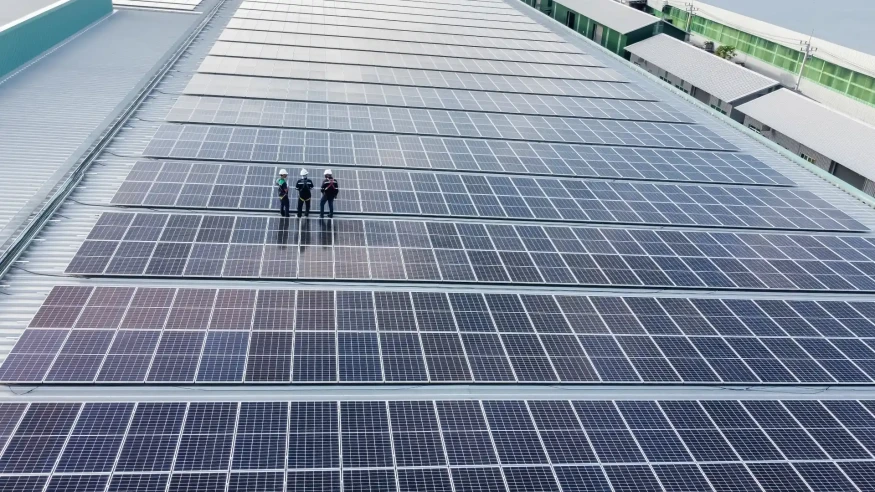
Large commercial projects demand even greater investment although there are various financing options becoming available. Understandably, Commercial installations, multi-residential blocks and industrial rooftops cost much more, sometimes moving into six figures. However, firms such as Octopus Energy, EQONIC and BOXT now provide payment plans that convert the large initial outlays into monthly payment schedules making adoption financially accessible. These schemes allow businesses and building owners to spread the cost of solar and battery installations into monthly or quarterly instalments which turns what was once a capital-intensive decision into a manageable operating expense.
Despite the upfront costs and payback periods, installing renewable energy systems such as solar panels and battery storage brings many rewards. Renewable energy can drastically cut your energy costs and carbon emissions, improve building value, boost brand image in the case of businesses, strengthen rental performance, and reduce operational costs. Furthermore, you can ensure that your building is future-proof and sustainable by using inexhaustible energy sources such as the sun and wind and reduce reliance on volatile fossil fuels. If you opt to install renewable energy for residential or commercial use, you will be helping to fight climate change by lowering your carbon footprint as well as improving local air quality which will lead to better public health outcomes.
The owner of a typical three-bedroom home can expect to save around £600 to £1,000 a year in energy costs once the solar panels and battery are installed. The estimated payback period for the return on investment is between 5 and 12 years for a battery solar system. A solar panel system's life expectancy is typically 25 to 30 years or more, with panels gradually degrading in efficiency (around 0.5% yearly) but still producing power, often around 80% of original capacity after 25 years, though key components like inverters might need replacement sooner (10-12 years). Any unused electricity once the battery is full can be sold back to the National Grid via the Smart Export Guarantee adding to the savings in energy costs and helping to reduce the payback period.
Multiple property studies have been conducted that show renewable installations significantly increasing building value. Research from Swansea University has indicated that having solar PV and other low-carbon technologies can raise the price of a home by 6-7%. This trend is reinforced by market intelligence. 1.6 million UK homes already have solar installed, representing just over 5.5% of all homes, and 40% of new builds integrated renewables from the outset in 2024. Interest in energy-efficient homes is on the rise even among the older demographics with a 34% jump in online searches for eco-friendly properties during 2025.
Barrows and Forrester’s analysis shows that solar panels, which typically cost £5,875 on average, add £11,500 of value to a property, nearly double the installation cost.
Rightmove produced a report in 2023 that found that increasing a property’s Energy Performance Certificate (EPC) rating from F to C could increase home value by as much as 15%. An EPC is a standardised rating (A-G) for how energy efficient a building is, indicating potential fuel costs and CO2 emissions. Based on a typical property price of £285,000, as registered by the Office for National Statistics, this represents a potential £42,750 of added value.
Younger buyers are driving the shift in demand for energy efficient homes. Research from Legal & General showed that buyers are willing to pay a 10.5% premium for low-carbon properties, with Gen Z future buyers willing to pay up to 20% more.
More recent research has found that consumers are prepared to pay 3.4% more for high energy-efficient homes which are A to B rated when compared with band D properties, while homes that are rated F or G sell for 7.4 % less than D-rated properties.
Another solid reason for considering renewable energy installation for your building is energy independence. All of us in the UK have experienced repeated surges in wholesale gas and electricity prices, especially from 2021 onwards, which has made it very clear how reliant we are on grid energy and how vulnerable we are to the volatile energy market. Solar PV combined with battery storage allows buildings to generate and store their own power, reducing exposure to volatile tariffs and peak-time pricing. As the UK transitions to electric vehicles and electric heating these benefits become more relevant. More power will be required by homes and buildings, and self-generation will help meet that demand at a far lower cost.
As well as all the economic arguments for installing renewable energy systems on buildings, technologies are also progressing at pace. UK Buildings are switching from being passive energy users to being active energy systems. Solar panels, advanced inverters, behind-the-meter batteries and intelligent control systems now work together to optimise energy use subject to demand, pricing signals, and weather forecasting. Commercial buildings have started to work as micro-energy hubs, adjusting their energy use or reducing peak grid demand. More and more housing developments include communal renewable systems, shared battery banks, and integrated EV charging infrastructure. These new developments are not only reducing emissions but are also helping buildings progress towards varying degrees of energy autonomy.
The long-term benefits of renewable energy for buildings, financial, environmental, and strategic are now too great to ignore. The case is becoming increasingly attractive for homeowners and a necessity for developers and landlords. In the decade ahead, renewable energy integration is set to become a defining feature of asset quality for the property market as a whole.
Find a local installer
Welcome to the biggest directory of UK renewable energy companies