.png)

Read Time : 11 Minutes
Solar Farms UK: A Guide to Solar Farm Requirements, Planning & Land
Land: Solar farms typically require around 4–5.6 acres per MW of capacity.
Grid: A viable grid connection is essential and can determine whether a project is feasible.
Planning: Solar farms require planning consent, with land quality, biodiversity and environmental impacts considered.
Solar farms have become an increasingly important part of the UK's electricity system. While rooftop solar panels generate electricity directly where it is used, solar farms allow much larger amounts of renewable electricity to be generated and supplied to the electricity network.
For farmers and other landowners, a solar farm can also provide an alternative long-term use for suitable land. However, having a large field does not necessarily mean that it is suitable for solar development.
The viability of a solar farm depends on numerous factors, including the location and size of the land, access to the electricity network, planning constraints, agricultural land classification, ecology, access and the economics of the proposed project.
Developing a solar farm is therefore considerably more complicated than simply installing a large number of solar panels in a field.
This guide explains the main considerations involved in developing a solar farm in the UK and what landowners should investigate before taking a project further.
COMPARE PRICES FROM LOCAL INSTALLERS
Compare prices from local companies fast & free
Enter your postcode to compare quotes from leading professionals. We promise to keep your information Safe & Secure. Privacy Policy
What is a Solar Farm?
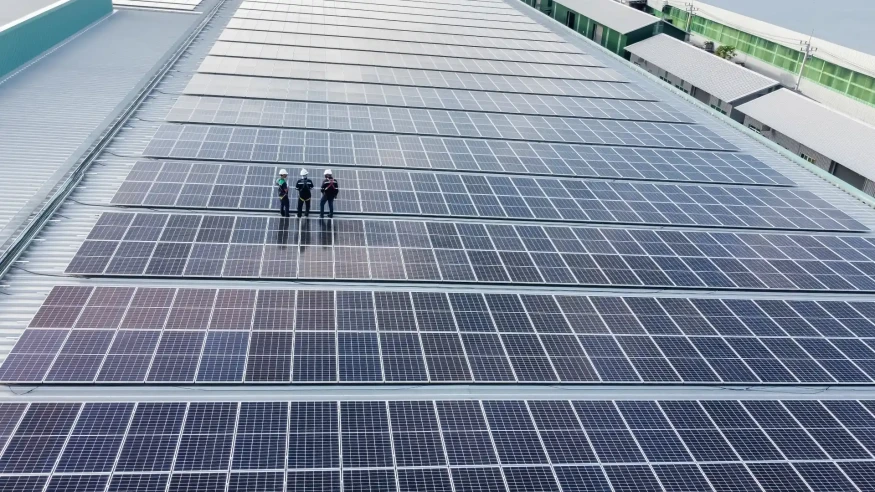
A solar farm is a large ground-mounted solar photovoltaic (PV) installation designed to generate electricity on a much greater scale than a typical domestic or commercial solar panel system.
A solar farm generally consists of rows of solar panels mounted on frames secured to the ground. The development will also normally require inverters, transformers, underground cabling and electrical infrastructure connecting the site to the electricity network.
Larger developments can also incorporate battery energy storage systems (BESS), allowing some of the electricity generated during periods of high solar production to be stored and exported at another time.
The UK Government's current National Policy Statement describes solar farms as one of the UK's most established renewable technologies and solar as the cheapest form of electricity generation. It also notes that large-scale solar farms can now, in some cases, be developed without subsidy.
Solar farms vary considerably in size. A relatively modest development might have a generating capacity of several megawatts (MW), while the UK's largest proposed projects can exceed 100 MW.
How Much Land Does a Solar Farm Need?
There isn't a fixed amount of land required for every megawatt of solar capacity.
Panel efficiency, spacing between rows, topography, site boundaries, access tracks, substations, landscaping and other infrastructure all affect the amount of land required.
Current government guidance estimates that a modern solar farm requires approximately 1.6 to 2.25 hectares (4 to 5.6 acres) for every MW of generating capacity.
As a rough indication:
| Solar Farm Capacity | Approximate Land Requirement |
| 1 MW | 4-5.6 acres |
| 5 MW | 20-28 acres |
| 10 MW | 40-56 acres |
| 20 MW | 80-112 acres |
| 50 MW | 200-280 acres |
| 100 MW | 400-560 acres |
These figures should only be treated as a general guide.
Government analysis of existing operational ground-mounted solar farms found a median footprint of approximately 2.25 hectares (5.6 acres) per MW. However, many of these installations use older, less efficient solar panels. The Government expects newer installations to require less land per MW as solar technology becomes more efficient.
This means that simply dividing the acreage of a field by five isn't sufficient to determine how large a solar farm could be built there. A developer will need to assess the usable area of the site.
What Makes Land Suitable for a Solar Farm?
The amount of available land is only one consideration.
A potentially suitable solar farm site will normally need to perform well in several areas.
Solar Irradiance
The amount of sunlight reaching the site directly affects how much electricity a solar farm can generate.
There are differences in solar irradiation across the UK, with southern parts of England generally receiving more solar energy than northern areas. However, viable solar farms are not restricted to southern England.
Modern solar PV can generate electricity effectively across the UK.
Developers use detailed solar resource modelling rather than simply deciding whether an area appears "sunny enough".
Topography
Relatively flat or gently sloping land is usually easier to develop than steep or irregular terrain.
The direction of the slope can also influence generation and system design.
Difficult terrain can increase construction costs, reduce the amount of usable land and make access for construction and maintenance more complicated.
Shading
Trees, woodland, buildings and other landscape features can shade solar panels and reduce electricity generation.
Some shading constraints can be accommodated through the layout of the development, but heavily shaded land may significantly reduce the viable area of a site.
Site Access
A solar farm requires much more than access for a normal car or van.
During construction, heavy vehicles will need to transport panels, mounting systems, transformers and other equipment to the site.
Developers therefore need to consider the suitability of surrounding roads, entrances, bridges and access tracks as well as the potential effect of construction traffic on nearby communities.
Flood Risk and Drainage
Flood risk needs to be considered at an early stage.
Solar panels themselves occupy relatively little ground area, but developments also contain electrical equipment, access tracks, substations and other infrastructure.
Drainage, soil conditions and potential changes to surface-water runoff may therefore form part of the site's planning and environmental assessments.
Grid Connection: One of the Most Important Considerations
One of the biggest misconceptions about solar farms is that finding suitable land is the hardest part of the process.
In reality, access to a viable electricity network connection can determine whether a project is commercially possible at all.
Electricity generated by a solar farm needs somewhere to go.
The developer therefore needs to establish whether the local electricity network can accept the proposed generation and what infrastructure would be required to connect it.
A connection could require new underground cables, transformers, switchgear or a new substation. In some cases, considerable reinforcement of the electricity network may be necessary.
The distance between the solar farm and its connection point is also important. A technically possible connection several miles from the site can be much more expensive than a suitable connection nearby.
For this reason, land next to suitable electricity infrastructure can sometimes be considerably more attractive to developers than apparently ideal land in a location where grid capacity is limited.
Current government planning policy recognises this explicitly. The National Policy Statement notes that developers may choose sites close to available grid export capacity to maximise existing infrastructure and reduce costs and disruption.
A large field with excellent solar exposure but no economically viable grid connection may have little potential as a solar farm.
For a landowner investigating the potential of a site, grid availability is therefore one of the first issues worth establishing.
Can Agricultural Land Be Used for a Solar Farm?
Yes.
Many UK solar farms are situated on agricultural land, but the agricultural quality of that land is an important consideration during the planning process.
Agricultural land in England and Wales is classified according to its quality.
Grades 1, 2 and 3a are regarded as Best and Most Versatile (BMV) agricultural land.
Current government policy does not prohibit solar farms on BMV land. However, where agricultural land is required for development, poorer-quality land should generally be preferred and the use of BMV land should be avoided where possible. Government policy also encourages the use of suitable previously developed, brownfield, contaminated and industrial land.
Consequently, agricultural land classification can materially affect the planning prospects of a proposed solar development.
An Agricultural Land Classification survey may be required to establish the quality of the land rather than relying solely on broad mapping.
Does a Solar Farm Stop the Land Being Used for Agriculture?
Not necessarily.
Unlike many forms of development, a solar farm does not always remove the entire site from agricultural use.
Sheep grazing is particularly compatible with many solar farms because sheep can graze underneath and between the rows of panels without interfering with the installation.
The Government's latest agricultural statistics illustrate this dual use. In England in 2025, approximately 9,500 hectares of agricultural land were covered by solar panels, with 52% of that land continuing to be used for agricultural production or grazing.
There is also growing interest in agrivoltaics, where agricultural production and solar electricity generation are deliberately designed to coexist.
The practicality of continued agricultural use will depend on the design of the solar farm, spacing and height of the panels, the type of farming involved and how the land is managed.
Do Solar Farms Need Planning Permission?
Yes. A commercial solar farm will normally require planning consent.
The route through the planning system depends partly upon the size and location of the development.
In England, solar generating stations with a capacity of more than 100 MW fall within the Nationally Significant Infrastructure Project (NSIP) regime. These projects are considered through the Development Consent Order process rather than an ordinary local planning application.
Smaller solar farms are generally considered through the normal planning system by the relevant Local Planning Authority.
Different planning regimes and policies apply across England, Wales, Scotland and Northern Ireland, so the exact process should always be checked for the location of the proposed development.
Planning permission is not simply a question of whether solar panels are acceptable in principle. A planning authority may need to consider numerous effects of the proposed development.
These can include:
- Landscape and visual impact
- Agricultural land quality
- Ecology and biodiversity
- Flood risk and drainage
- Archaeology and heritage
- Public rights of way
- Highway access and construction traffic
- Residential amenity
- Glint and glare
- Trees and hedgerows
- Noise from electrical equipment
- Grid infrastructure
- Site security and fencing
- The cumulative impact of other developments in the area
Large projects can require extensive surveys and consultation before a planning application is submitted.
What is Glint and Glare?
Solar panels are designed to absorb sunlight rather than reflect it, but reflections can still occur under certain conditions.
A glint and glare assessment considers whether reflections from the solar panels could affect nearby homes, roads, railway lines or aviation.
This can be particularly important where a proposed solar farm is close to an airport, airfield or major transport route.
The orientation and angle of the panels, surrounding topography and screening can all influence the potential impact.
It is therefore something developers may investigate during the design stage rather than after the layout of the solar farm has been finalised.
Biodiversity and Solar Farms
The ecological impact of a solar farm can be an important part of the planning process.
Before development, ecological surveys may identify habitats, protected species, hedgerows, watercourses and other features that need to be retained or protected.
However, solar farms can also provide opportunities for habitat improvement.
Areas between and underneath panels can potentially be managed as grassland or wildflower habitat, while new hedgerows, ponds, woodland or habitat corridors can sometimes be incorporated around a development.
In England, most developments subject to the statutory Biodiversity Net Gain regime must achieve at least a 10% increase in biodiversity value compared with the pre-development baseline. Biodiversity value is calculated using the statutory biodiversity metric.
Where significant habitat is created or enhanced for BNG, it generally needs to be maintained for at least 30 years.
There is an important change affecting the very largest solar farms. From 2 November 2026, mandatory Biodiversity Net Gain will also apply to Nationally Significant Infrastructure Projects in England, including qualifying large energy projects.
This means biodiversity increasingly needs to be considered as an integral part of solar farm design rather than simply something addressed at the end of the planning process.
What Equipment Does a Solar Farm Need?
The solar panels are the most visible part of a solar farm, but they are only one component of the overall installation.
A typical development can include:
- Solar PV modules
- Ground-mounted support structures
- Inverters
- Transformers
- High and low-voltage electrical equipment
- Underground cabling
- Substation and grid connection equipment
- Access tracks
- Security fencing
- CCTV and other security equipment
- Communications and monitoring systems
Depending on the project, a solar farm may also incorporate a Battery Energy Storage System (BESS).
Battery storage can allow electricity to be stored rather than exported immediately. This can provide greater flexibility over when electricity is supplied to the network, although the battery installation brings its own design, safety, planning and grid considerations.
Fixed Solar Panels vs Tracking Systems
Not every solar farm uses the same type of mounting system.
Many UK solar farms use fixed mounting structures, where panels remain at a predetermined angle and orientation.
Other projects can use solar trackers, which move the panels during the day so that they follow the sun.
Tracking can increase electricity generation but adds mechanical complexity and can affect land requirements, visual impact, maintenance and project costs.
The best solution therefore depends on the characteristics and economics of the individual site.
How Much Electricity Does a Solar Farm Generate?
The installed capacity of a solar farm is normally expressed in megawatts (MW).
However, a 10 MW solar farm does not continuously generate 10 MW of electricity.
Solar generation varies according to daylight, weather, season, panel orientation, temperature and other factors.
A developer will normally create a detailed generation model for the site using local solar irradiation data and the proposed equipment and layout.
It is therefore better to distinguish between:
MW – the maximum rated generating capacity of the solar farm.
and
MWh – the amount of electricity actually generated over a period of time.
The annual electricity output of two identically sized solar farms can differ because of their location, layout and equipment.
COMPARE PRICES FROM LOCAL INSTALLERS
Compare prices from local companies fast & free
Enter your postcode to compare quotes from leading professionals. We promise to keep your information Safe & Secure. Privacy Policy
How Much Does it Cost to Build a Solar Farm?
There is no simple price per acre or price per MW that accurately describes every solar farm.
The panels themselves represent only part of the development cost.
A project's economics can also include:
- Land acquisition or lease costs
- Planning and professional fees
- Ecological and environmental surveys
- Solar panels and mounting systems
- Inverters and transformers
- Grid connection charges
- Network reinforcement
- Cabling
- Substations
- Construction and civil engineering
- Access roads
- Fencing and security
- Landscaping
- Finance and insurance
- Operation and maintenance
- Business rates and other ongoing costs
- Eventual decommissioning
Grid connection costs can vary particularly dramatically from one project to another.
For this reason, apparently similar solar farms can have very different development costs.
It would therefore be misleading to judge whether a project is viable from a generic "cost per MW" figure alone.
Can I Build a Solar Farm on My Land?
Potentially, but the first step shouldn't be buying solar panels or applying for planning permission.
A preliminary feasibility assessment should establish whether there is a realistic project in the first place.
At The Renewable Energy Hub, we have received enquiries from landowners across the UK interested in developing or leasing their land for solar farms. A common misconception is that having a sufficiently large area of land is the main requirement. In practice, factors such as grid availability, planning constraints, land classification and access can be just as important as the size of the site.
Some of the first questions to consider are:
How much usable land is available?
The total size shown on a title plan isn't necessarily the area available for solar panels.
What is the agricultural land classification?
Lower-grade agricultural land may face fewer policy concerns than Best and Most Versatile land.
Is there a realistic grid connection?
This can be one of the most important factors affecting whether the project proceeds.
Are there significant planning constraints?
Landscape designations, heritage assets, ecology, flood risk and nearby residential properties can all affect a site.
Can the site be accessed?
Construction traffic needs suitable access.
Who owns the land and what rights affect it?
Rights of way, restrictive covenants, tenancies, mortgages and rights held by third parties can complicate development.
A specialist solar developer can undertake an initial assessment before significant money is spent on planning and technical work.
Leasing Land for a Solar Farm
A landowner doesn't necessarily have to develop or own the solar farm.
A common alternative is to lease suitable land to a solar developer.
The developer may fund the planning process, grid connection, construction and operation of the solar farm while paying rent to the landowner under a long-term agreement.
However, solar leases are significant legal commitments.
A developer may initially request an option agreement, giving it the right to enter into a lease if it successfully obtains planning permission and a viable grid connection.
This can tie up the land while the developer investigates the project.
Landowners should therefore obtain their own professional legal and financial advice before signing an option or lease.
Important issues can include the length of the option, rent and rent reviews, access rights, responsibility for planning costs, tax implications, agricultural subsidies, insurance, assignment of the lease, reinstatement of the land and what happens if the project never proceeds.
The landowner's solicitor and adviser should ideally have experience with renewable energy land agreements.
How Long Does a Solar Farm Last?
Solar farms are long-term developments.
Modern solar panels can continue generating electricity for decades, although their output gradually declines as the modules age.
Planning permissions and leases for modern projects can therefore cover several decades of operation.
During this period, panels, inverters and other components can be maintained or replaced where necessary.
Importantly, a solar farm does not normally mean that the land is permanently lost to another use.
The mounting structures used for many solar farms are driven or screwed into the ground rather than supported by extensive concrete foundations. At the end of the project's operational life, the panels, mounting structures, electrical equipment and associated infrastructure can generally be removed.
The planning permission and land agreement will normally contain requirements relating to eventual decommissioning and restoration of the site.
How Long Does it Take to Develop a Solar Farm?
Solar farms themselves can be constructed relatively quickly once all the necessary permissions and infrastructure are in place.
The development process beforehand can take considerably longer.
A project may need to pass through:
Initial site assessment → Grid investigation → Environmental and technical surveys → Design → Community consultation → Planning → Grid connection arrangements → Financing → Construction → Commissioning
Some of these stages can happen simultaneously, while others depend on earlier work being completed.
Grid connection timescales can be particularly important.
Landowners should therefore be cautious about assuming that interest from a solar developer means construction will begin in the near future.
There can be a substantial difference between a developer investigating a potential site and a fully consented and financed solar farm with a deliverable grid connection.
What Are the Potential Benefits of a Solar Farm?
The most obvious benefit is the production of renewable electricity without burning fossil fuels during operation.
Solar farms can also offer other potential benefits.
For landowners, leasing land can provide a long-term source of income and diversify revenue away from conventional agricultural activity.
For the electricity system, large-scale solar can add significant generating capacity relatively quickly.
A thoughtfully designed development may also provide opportunities for biodiversity enhancement, habitat creation and continued agricultural activity such as sheep grazing.
The UK's current energy strategy anticipates a substantial expansion of solar. The Government's Clean Power 2030 Action Plan sets out a deployment range of 45–47 GW of solar PV by 2030, with the potential to exceed that range where the electricity system requires it.
What Are the Potential Drawbacks?
Solar farms can also create legitimate concerns, particularly for communities living near proposed developments.
Large installations can significantly change the appearance of a rural landscape.
Other concerns can include loss of productive agricultural land, construction traffic, effects on wildlife and heritage, glint and glare, fencing, security infrastructure and the cumulative effect of several energy developments within the same area.
Grid infrastructure can also extend beyond the boundary of the solar farm itself.
These impacts don't mean that a solar farm is necessarily unsuitable, but they explain why site selection and project design are so important.
Screening, retention of hedgerows, sensitive panel layouts, habitat improvements and appropriate separation from nearby properties can all help reduce impacts.
Community consultation is therefore an important part of developing larger projects.
Are Solar Farms a Permanent Change of Land Use?
Generally, no.
One significant difference between a solar farm and many conventional developments is that solar installations can normally be removed.
The operational period may extend for several decades, but once the development is decommissioned, panels, mounting structures, cabling and electrical equipment can be removed and the land restored in accordance with the planning permission and lease arrangements.
This makes solar farms a fundamentally different proposition from developments where agricultural soil is permanently covered by buildings and roads.
Nevertheless, good soil management during construction, operation and decommissioning is important if the land is ultimately going to return to agricultural use.
Solar Farms and the Future of UK Energy
Solar farms are likely to remain an important part of the UK's transition towards a lower-carbon electricity system.
Increasing panel efficiency means that more electricity can be generated from a given area of land than was possible with earlier generations of solar technology. Battery storage and improvements to the electricity network may also change how future solar farms operate.
At the same time, solar development has to compete with other demands on land.
Food production, landscape protection, housing, biodiversity and renewable electricity generation are all legitimate considerations.
For this reason, the question isn't simply whether the UK should build more solar farms. Where they are built, how they are designed and how effectively the land is used are equally important.
For an individual landowner, the same principle applies.
A large area of land is a starting point, not proof that a viable solar farm can be built.
Land quality, planning policy, environmental constraints and particularly the availability and cost of a grid connection all need to align before a project is likely to progress.
A properly assessed site, however, can potentially generate renewable electricity for decades while allowing parts of the land to continue supporting agriculture and wildlife.
Please note: Solar farm planning requirements, energy policy and grid connection rules can change. The information in this guide was correct at the time of publication and is intended as general guidance. Anyone considering developing or leasing land for a solar farm should obtain current professional advice before making financial, legal or planning decisions.
Find a local installer
Welcome to the biggest directory of UK renewable energy companies
 How much do Solar Panel Systems Cost? UK Prices 2026