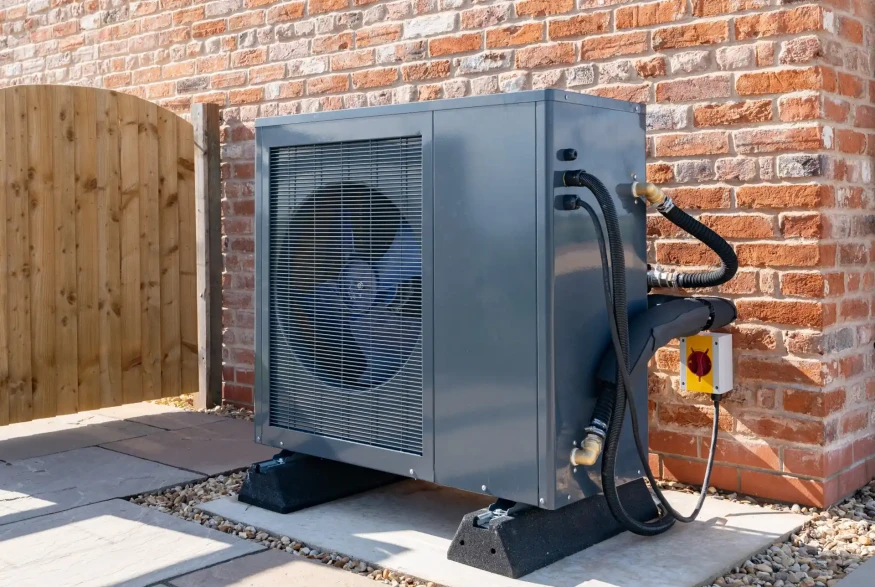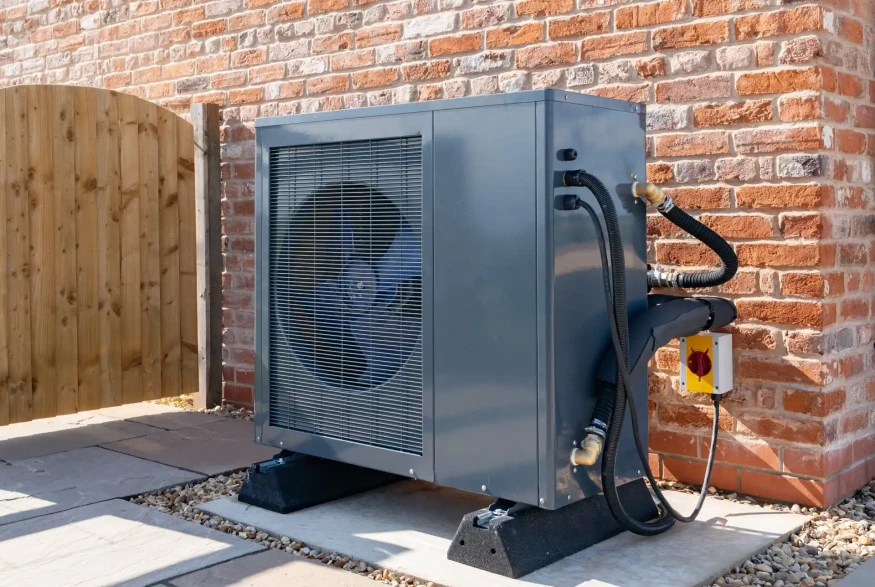
The number of applications for the UK’s Boiler Upgrade Scheme (BUS) reached a record high in September of this year, the highest monthly total on record, rising 20% from the previous month. New industry figures and government data show that the number is more than a quarter higher than a year earlier and confirms an upward trend. There are more homeowners moving toward low-carbon heating technologies like heat pumps than ever before.
September’s numbers weren’t just a one-off, it’s part of a trend that has gained noticeable pace throughout the year. The government’s latest data notes that in several months of 2025, heat pump voucher applications rose rapidly with one month recording over 4,000 applications, indicating both consumer appetite and a wider acceptance across the country. Since the introduction of the Boiler Upgrade Scheme there has been a significant increase in the uptake of heat pumps. They have become even more popular since the government raised the BUS grant to £7,500 in October 2023, for air source heat pumps and ground source heat pumps. In the six months following the increase, applications surged by 84% compared to the previous year. Over recent years more homeowners and business owners have come to realise that these systems are more than just a green badge, they’re practical investments in comfort and efficiency.
COMPARE PRICES FROM LOCAL INSTALLERS
Compare prices from local companies fast & free
Enter your postcode to compare quotes from leading professionals. We promise to keep your information Safe & Secure. Privacy Policy
The BUS was first introduced in May 2022 offering £5,000 for air source heat pumps and biomass boilers and £6,000 for ground source heat pumps. Between May 2022 and the end of March 2024, 23,875 heat pumps and biomass boilers were installed through the BUS which represented a more than 100% increase from the first year. By the end of March 2024, grants totalling over £138.9 million had been paid out for these installations. Approximately 72% of grant funded installations replaced a fossil fuel-based system by the end of March 2024. By early 2025, over half of replacements were gas boilers.
Sachin Vibhute, technical consultant at LG Electronics UK, said the latest data from 2025 “shows real momentum behind low carbon heating in the UK”. He described September 2025’s total as evidence that “more homeowners and businesses are choosing cleaner, more efficient technologies.”
However, Vibhute urged stronger action from the government saying:
“To truly meet the green energy challenge, schemes must go further in scope and ambition. All eyes will be on next month’s Autumn Budget for stronger commitments to low carbon heating. This includes continued investment in installer skills and consumer awareness, which along with government policy are key to accelerating the transition to a cleaner, more resilient energy future.”
2025 is proving to be a turning point in UK home heating with heat pumps becoming a mainstream choice across the UK for the first time. Record-setting incentives, bold government policy, and upskilled installers are driving this change as well as the promise of new hybrid and solar solutions. Homeowners are understanding that the decisions they make now won’t just affect their utility bills but will decide their energy future for years to come. Government policy can change, and incentives be removed so now is the perfect time to consider switching from a gas boiler to a heat pump. It’s worth mentioning that other regional or utility-led schemes may also occasionally supplement this support.
Currently air source heat pumps are the most popular technology, making up over 96% of grants paid out. Due to the ever-growing demand for heat pumps, the government increased the 2024/25 budget for the BUS by 55 million to 205 million and nearly doubled the 2025/26 budget to £295 million.
The surge in applications coincides with the government publishing its Carbon Budget and Growth Delivery Plan, which is a comprehensive roadmap for how the UK intends to meet its legally binding carbon budgets through to the mid-2030s. The plan aims to align decarbonisation with economic growth, promising “clean energy, lower bills, warmer homes and good jobs,” and highlights domestic heating and building energy efficiency as key sectors for emissions cuts.
Garry Felgate, chief executive of The MCS Foundation said that he welcomed the government’s “restated commitment to reducing electricity prices and significantly increasing heat pump installations.” He credited existing policies for the growth in uptake of heat pumps but warned that further action was needed to hit future targets.
“MCS data shows that government policies such as the Boiler Upgrade Scheme grants have helped boost heat pump uptake across the UK. What is needed now to reach the target of 1.5 million heat pumps installed every year is real action to reduce electricity prices. Heat pumps must always be cheaper to run than a gas boiler. Moving levies off electricity bills into general taxation in the upcoming Autumn Budget would both tackle fuel poverty and finally set the country on a trajectory to replacing fossil fuel heating entirely.”
In November 2024, the government held a consultation looking for ways to support further growth by broadening the scheme’s scope to include innovative technologies and by simplifying the application process. As a result of this consultation, they implemented key changes to the Boiler Upgrade Scheme including the removal of the mandatory loft and cavity wall insulation requirements for homeowners applying for the BUS after May 8, 2024. This helped to make the scheme easier and cheaper to access. Further to this, the changes also made biomass boilers with a cooking function eligible for the grant and the grant voucher is now only valid if the application is made within 120 days of the installation date.
These changes mean that the homeowner can now choose to carry out insulation work at a pace that suits them rather than having to do it all at once to get the grant. Being able to delay installing insulation can reduce the upfront cost of installing a heat pump, saving as much as around £2,500 for some properties according to the government.
The grant increase from October 2023 is not the only factor contributing to the increase in heat pump installations. Fluctuations in oil and gas prices have made the stability of heat pumps more attractive to households. The heat pump industry has matured a great deal in the last few years with a growing number of certified heat pump installers and an improved product range. New heat pumps are designed for easier installation, with some systems requiring less space and fewer safety restrictions. Technological advancements are being made all the time. AI is being integrated into heat pumps to analyse weather, occupancy, and energy prices which allows systems to self-optimise for efficiency and comfort. New tools are being developed that can provide faster heat loss assessments using smart phone apps. There is also an increasing trend of pairing heat pumps with solar panels and battery storage to maximise sustainability as well as lower costs. New heat pump models are being introduced that use environmentally friendly natural refrigerants, such as R290, which are also effective in older buildings. Furthermore, the cost comparison between heat pumps and gas boilers is becoming closer particularly in well-insulated homes or those with solar power.
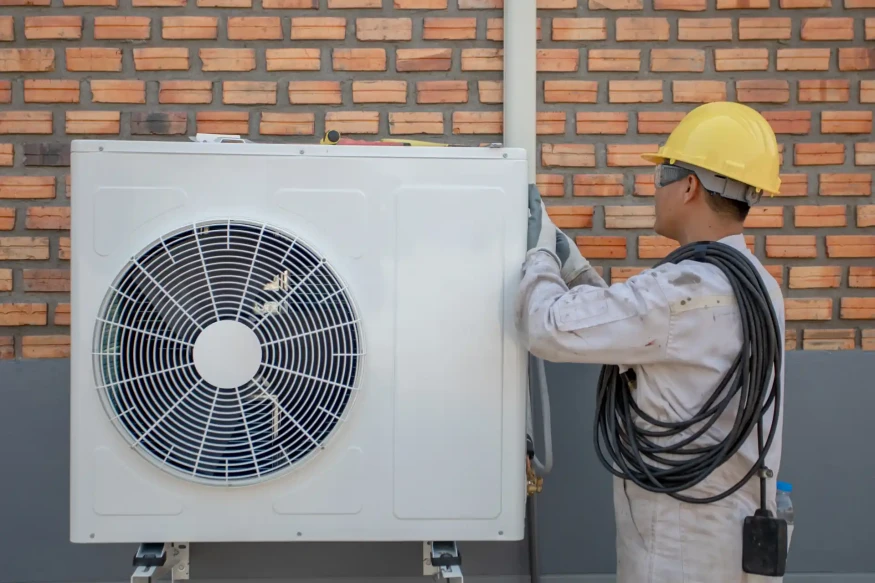
Despite the positive trends, experts in the field believe that further action is required to reach the government’s long-term goals. There are still policy and market factors that need to be addressed to speed up the transition away from fossil fuel heating. Although the number of qualified heat pump installers has risen there is still a shortage of professionally trained installers to meet the growing demand, with some installers not investing enough time in training their team.
Find a local installer
Welcome to the biggest directory of UK renewable energy companies