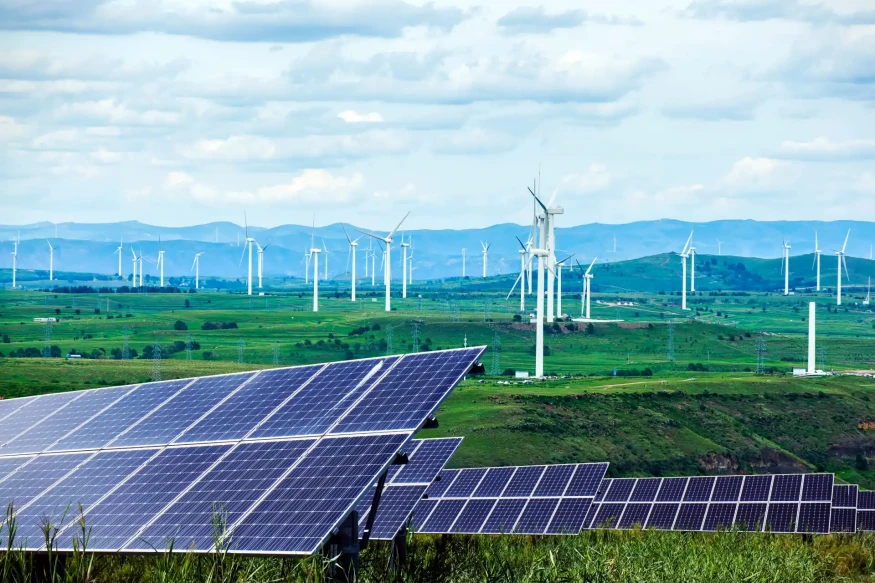
The UK government has approved the One Earth Solar Farm, a major renewable energy project planned across Nottinghamshire and Lincolnshire, one of the UK's largest approved solar projects and the second largest solar development to receive planning consent to date.
The development, which will connect to the High Marnham substation, will combine large-scale solar generation with a battery energy storage system (BESS), and is expected to generate up to 740 MW of renewable electricity. Developers say the project could generate enough electricity to power the equivalent of more than 200,000 homes each year which amounts to approximately half the homes in Lincolnshire, as well as avoid 2.1 million tonnes of carbon dioxide emissions.
COMPARE PRICES FROM LOCAL INSTALLERS
Compare prices from local companies fast & free
Enter your postcode to compare quotes from leading professionals. We promise to keep your information Safe & Secure. Privacy Policy
Battery storage has an important role to play by allowing excess electricity generated during peak sunlight hours to be stored and released when demand is higher, improving grid flexibility and supporting a more reliable renewable energy system.
This project alone will account for over 1% of the 54–57-gigawatt solar target set in the Clean Power 2030 Action Plan. This development along with other similar ones will help to protect the UK from unpredictable international gas prices and further increase the UK’s ability to attract significant investment into new energy infrastructure which will grow our economy and boost jobs.
One Earth is being developed through a partnership between PS Renewables and Perigus Energy, a renewable energy company previously part of Ørsted. The project also includes measures to enhance local habitats, support native wildlife and increase biodiversity.
In addition to clean energy generation, the One Earth project will provide a community benefit fund and a jobs and skills plan aimed at creating local employment opportunities.
Families and businesses will benefit from more solar power as the UK takes another step towards delivering cheaper and cleaner homegrown power. As this development is designed to produce more than 50MW of electricity and is one of the UK’s largest onshore renewable energy investments, One Earth has been classified as a Nationally Significant Infrastructure Project. It is the 42nd nationally significant project approved during this Parliament and forms part of the government’s drive to back growth while delivering homegrown power to protect the British people from unstable fossil fuel markets. Global instability from Russia's invasion of Ukraine to the conflict involving Iran has exposed the cost of relying on fossil fuel markets Britain does not control.
A strict statutory planning process was adhered to in order to obtain approval for the One Earth Solar Farm. A Development Consent Order application was submitted to the Planning Inspectorate on the 27th of February 2025 before being accepted for examination one month later.
At this point there was a six-month examination of the proposal under the Planning Act 2008. During this time, local residents, statutory consultees, local authorities, and other interested parties were asked to submit evidence and comment on the project. The process included public hearings, site inspections, and consultation with local authorities, technical bodies and community representatives before a final decision was reached. Once this phase of the process was completed the Examining Authority submitted its recommendation to the Secretary of State for Energy Security and Net Zero on 8 April 2026. The final approval was issued by Lord Whitehead under delegated authority from the Energy Secretary.
The Planning Inspectorate said this was the 111th energy infrastructure application it has determined out of the 179 projects examined to date. It also confirmed that the decision was reached within the statutory timescales.
Matt Hazell, co-owner of PS Renewables, said:
“We are very pleased to achieve this important milestone for One Earth and want to thank everyone who took part in the examination process over the last year. It is crucial for the UK that large renewables projects such as One Earth can be progressed as quickly as possible whilst also ensuring they are properly scrutinised.”
Perigus Energy Programme Manager Randall Linfoot added:
“Solar energy is an essential component to enable the power system to run on clean energy and we look forward to continuing to engage with local communities and stakeholders as the project enters its next phase.”
The next stage for One Earth is securing investment approval. Construction is forecast to take two years, with the project targeted for completion by 2029.
This project marks the 30th nationally significant clean energy project approved by the government since July 2024. Collectively these solar projects generate enough clean energy to power the equivalent of more than 19 million homes.
The decision to approve the “One Earth” project follows the Government’s approval of the 320-megawatt Peartree Solar Farm north of Hull and the 150 MW Dean Moor Solar Farm in Cumbria. The three projects, taken together, will power the equivalent of 330,000 homes.
The largest project to have received planning consent, to date, is Springwell Solar Farm in Lincolnshire, which will have a capacity of 800 MW. Four even bigger projects are in the pipeline, having been submitted for approval.
Solar Energy UK Chief Executive Chris Hewett said:
“Solar power at scale means cheap, clean, homegrown power, insulated from the global instability that has caused energy prices to rocket. Solar farms offer the cheapest power available and the larger they are, the bigger the economies of scale. Every panel, whether on the ground or on rooftops, is a step towards a better Britain, with an economy safeguarded from the whims of geopolitics.”
The approval of the One Earth solar project also coincides with the government confirming new planning reforms. In future, the mandatory pre-application consultation requirements for major infrastructure projects will be scrapped which will cut up to 12 months from the planning process and potentially save the industry £1 billion this Parliament. These changes will be delivered through the landmark Planning and Infrastructure Act and will come into effect later in July 2026.
The approval comes as the UK solar sector continues to expand rapidly:
Key Solar Facts
- The solar industry estimates that around 26 gigawatts of solar generation capacity are currently in place across the UK, with multiple gigawatts being installed every year.
- More than 1.7 million UK homes already have solar panels fitted, part of over 2 million smaller-scale installations.
- Currently, solar and battery storage support around 20,000 UK jobs. By 2035, it has been estimated that the sector could support around 43,000 jobs and contribute over £5 billion GVA (gross value added).
- The sector contributes almost £1.9 billion GVA to the economy annually.
- Utility-scale solar provided around £61 million of additional farm income in 2024.
- 84% of the public support solar energy according to government polling while 77% of the public support local solar farm development (government polling).
- The latest data published by the government shows that 2025 was the strongest year on record for solar deployment, with 269,000 installations completed across the UK.
Solar is one of the cheapest forms of electricity generation available, and approvals for projects such as the One Earth Solar Farm come alongside wider plans to roll out plug-in solar in UK stores and make solar panels standard on new homes in England. Together, these initiatives are helping to expand the UK's renewable energy pipeline and increase the supply of low-carbon electricity needed to meet future demand.
Find a local installer
Welcome to the biggest directory of UK renewable energy companies