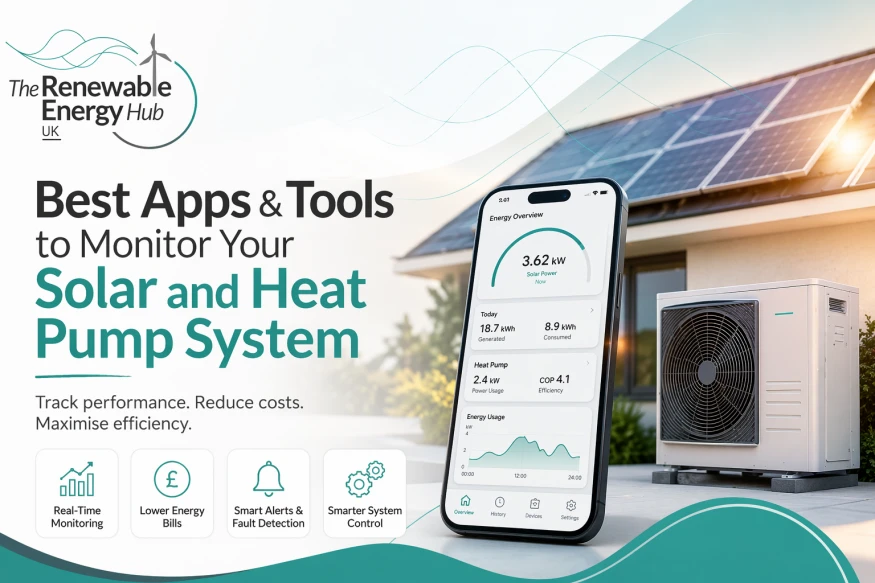
Monitoring your solar panels and heat pump should go beyond simply checking if they are running; it should help you actively reduce costs and improve efficiency. Studies of UK households show that only around 45% of solar energy is typically used within the home, while better monitoring and energy management can reduce grid electricity demand by up to 24%.
This gap highlights where most systems fall short. Without clear visibility, energy is often exported at lower value or used at the wrong time, especially when solar and heating systems operate independently. The real benefit comes from understanding and controlling how energy flows through your home, not just generating it.
This guide explores the best apps and tools available in the UK to help you monitor, manage, and maximise your solar and heat pump system effectively.
COMPARE PRICES FROM LOCAL INSTALLERS
Compare prices from local companies fast & free
Enter your postcode to compare quotes from leading professionals. We promise to keep your information Safe & Secure. Privacy Policy
Why Monitoring Your Solar and Heat Pump System Matters
Monitoring is not just about viewing data; it directly influences how efficiently your system operates and how much you save over time. Understanding this impact helps you make better day-to-day energy decisions.
Improve Energy Efficiency and Self-Consumption
Most UK homes export a significant portion of their solar energy because usage doesn’t align with generation. Monitoring helps you identify peak generation periods and adjust usage accordingly.
For example, running your heat pump or heating water during midday solar peaks allows you to use more of your own energy instead of exporting it at lower rates.
Lower Energy Bills
With the rise of time-of-use tariffs, when you use electricity matters as much as how much you use. Monitoring tools show exactly when your home relies on grid electricity, allowing you to shift high-consumption activities to off-peak hours or solar generation periods, reducing reliance on expensive peak-time electricity.
Detect Faults and Performance Issues Early
System faults are not always obvious, especially when performance drops gradually. Monitoring apps highlight deviations in expected output, such as lower-than-usual solar generation or excessive energy consumption by a heat pump.
Identifying these issues early helps prevent prolonged inefficiency and avoids unexpected increases in energy bills.
Optimise How Your Systems Work Together
Solar panels and heat pumps deliver the most value when they operate in coordination. Monitoring enables you to align heating cycles with solar generation, ensuring renewable energy is used when available.
This reduces unnecessary grid usage and improves overall system efficiency, especially during transitional seasons when heating demand varies throughout the day.
Understanding the impact of monitoring makes it easier to evaluate the tools available, especially when different platforms offer varying levels of control, integration, and practical value.
Types of Solar and Heat Pump Monitoring Apps and Tools
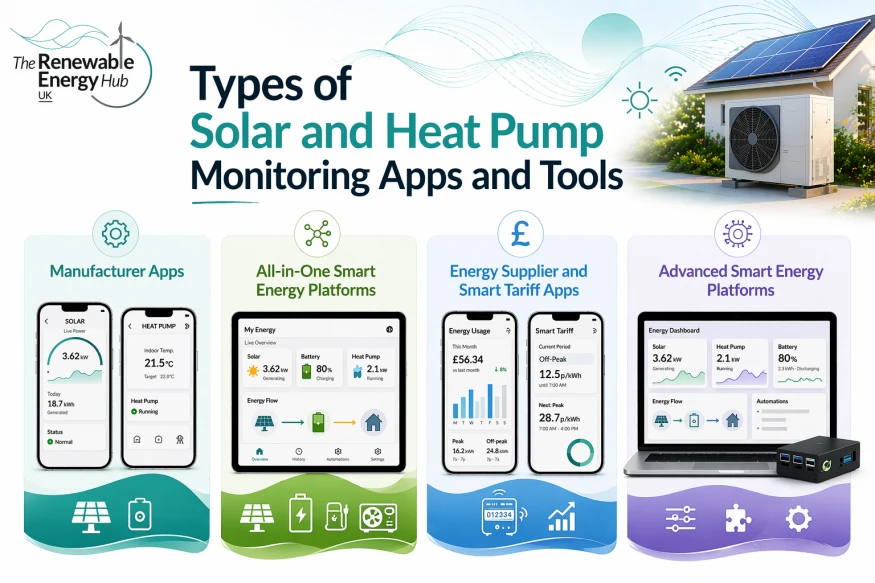
The UK market offers a wide range of monitoring apps, each designed for different levels of control and system complexity. These tools broadly fall into categories based on how much of your energy system they cover and how well they integrate multiple components into a single view.
Manufacturer Apps (Solar Inverters & Heat Pumps)
Most systems come with manufacturer-provided apps designed to monitor individual components such as your solar inverter or heat pump.
These apps are reliable for tracking performance but are typically limited to one system, meaning you may need separate apps for solar and heating.
For solar systems, apps like the SolarEdge Monitoring App, Enphase Enlighten, and SMA Sunny Portal provide detailed insights into energy generation and system health.
For heat pumps, apps such as the myVaillant app, Daikin Onecta app, and Mitsubishi MELCloud focus on heating control, scheduling, and efficiency tracking.
Best for:
- Homes with standalone systems
- Users who want simple, device-specific monitoring
All-in-One Smart Energy Platforms (Best for Full System Control)
All-in-one platforms are designed to bring multiple systems into a single dashboard, allowing you to monitor and coordinate solar generation, heating, storage, and usage in real time.
These platforms are particularly effective in homes aiming to increase self-consumption and reduce peak-time grid dependency.
Solutions like the myenergi ecosystem and the GivEnergy app provide centralised control and automation features that align energy usage with generation patterns.
Best suited for homes with:
- Solar panels and battery storage
- EV chargers or additional energy systems
- A need for automation and optimisation
Energy Supplier and Smart Tariff Apps (Cost Tracking Only)
Energy supplier apps do not monitor system performance but provide important insights into how energy usage translates into cost.
In the UK, where tariffs vary by time of use, these apps help you understand when electricity is most expensive and how your usage patterns affect billing.
Apps such as the Octopus Energy app, OVO Energy app, and British Gas app are useful for tracking consumption and identifying peak usage periods.
Best for:
- Cost tracking and tariff optimisation
- Understanding daily and monthly energy spend
Limitation:
- No visibility into solar generation or heat pump performance
Advanced Smart Energy Platforms (For Greater Control and Integration)
For users who want deeper control, advanced platforms allow integration across multiple systems and enable automation based on real-time conditions such as solar output or electricity pricing.
These tools go beyond standard monitoring by allowing custom configurations and smarter energy management.
Platforms like Home Assistant and OpenEnergyMonitor are widely used for building flexible, highly customised setups.
|
|
|
|
|
|
|
|
|
|
|
|
|
|
|
|
|
|
|
|
OpenEnergyMonitor typically requires additional hardware and setup, making it more suitable for users comfortable with a more hands-on approach.
Which Type of Monitoring Tool Should You Choose?
Choosing the right tool depends on how your system is set up and how actively you want to manage your energy usage. Use this quick breakdown to decide what fits best:
- If you have a simple solar or heat pump setup
Go with manufacturer apps like SolarEdge Monitoring App or myVaillant app
They provide reliable performance data without added complexity
- If you want to increase solar self-consumption and reduce energy waste
Choose integrated platforms like myenergi or GivEnergy app
These help align energy usage with generation patterns automatically
- If your focus is on reducing electricity bills under UK tariffs
Use supplier apps like Octopus Energy app alongside your monitoring system
They help you track costs and shift usage away from peak pricing periods
- If you have multiple systems from different brands
Consider third-party or advanced platforms like Home Assistant
These allow you to bring everything into one interface with flexible integration
- If you want full control, automation, and detailed insights
Use platforms like OpenEnergyMonitor
Best suited for users comfortable with setup and custom configuration
There is no one-size-fits-all solution; the best monitoring tool is the one that matches your system complexity and how actively you want to manage your energy usage.
With a clear view of available tools and platforms, the next step is identifying which features actually influence performance, cost savings, and long-term usability in real-world conditions.
How to Choose the Right Solar and Heat Pump Monitoring App
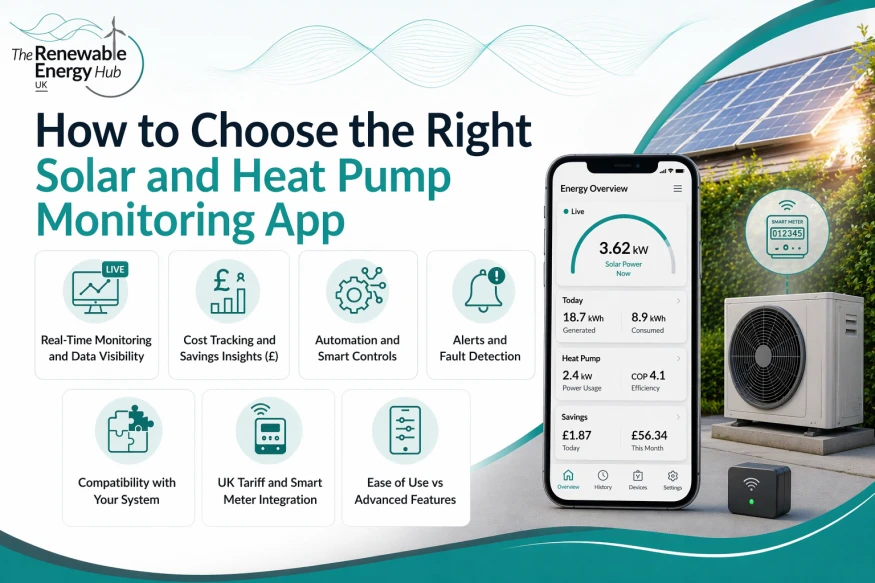
Choosing the right monitoring app depends on your system configuration, how much control you want, and how comfortable you are with technology. The following factors help narrow down your options effectively.
Real-Time Monitoring and Data Visibility
Your app should provide accurate, real-time data on solar generation, household consumption, and grid import/export. This allows you to immediately see how your system is performing and adjust usage accordingly.
Without real-time visibility, it becomes difficult to identify inefficiencies or take advantage of peak solar generation periods.
Cost Tracking and Savings Insights (£)
Energy data is more useful when it is translated into cost. Apps that show how much electricity you are buying, exporting, or saving in monetary terms help you understand the financial impact of your system.
This is particularly useful when comparing usage patterns across different tariffs or evaluating long-term return on investment.
Automation and Smart Controls
Automation allows your system to respond to conditions without manual input. For example, some platforms can automatically run your heat pump when solar generation is high or electricity prices are low.
This reduces reliance on manual scheduling and ensures energy is used more efficiently based on real-time conditions.
Alerts and Fault Detection
Monitoring apps should notify you when something is not performing as expected. This includes sudden drops in solar output, unusually high energy consumption, or system errors.
Early alerts allow you to address issues quickly, preventing prolonged inefficiency or unnoticed faults that could increase energy costs over time.
Compatibility with Your System
Not all monitoring apps are compatible with every inverter, heat pump, or battery system. It is important to confirm that the app supports your specific equipment and that it has been properly configured during installation.
Lack of compatibility often results in incomplete data or the need to manage multiple apps.
UK Tariff and Smart Meter Integration
In the UK, where energy pricing varies by time of use, integration with smart meters and tariff structures is increasingly important.
Apps that account for tariff changes can help you adjust energy usage to cheaper periods, making it easier to reduce costs without changing overall consumption habits.
Ease of Use vs Advanced Features
Some apps focus on simplicity, offering clear dashboards and basic insights, while others provide detailed analytics and customisation options.
Choosing the right balance depends on how actively you want to manage your system. A complex app may offer more control, but only if you are willing to use its full capabilities.
Once you understand which features matter, it becomes easier to compare platforms in context, especially when each tool is designed for a different level of system complexity.
Can Solar and Heat Pump Monitoring Be Integrated?
Integrating solar and heat pump monitoring into a single system can improve coordination and efficiency, but it depends heavily on system compatibility, installation approach, and the platforms used.
When Integration Is Possible
Integration is possible when your solar inverter, heat pump, and any additional systems are either from the same manufacturer or supported by a common platform.
Some setups use energy management systems that pull data from multiple devices into one dashboard, but this usually requires proper configuration during installation rather than being enabled by default.
Common Limitations in Installations
Many UK homes end up using separate apps because solar panels and heat pumps are often installed at different times or by different providers.
Each system typically comes with its own monitoring platform, and without a compatible integration layer, data remains fragmented, making it harder to coordinate energy usage effectively.
Benefits of a Unified Energy Dashboard
A unified dashboard allows you to see exactly how solar generation aligns with heating demand, helping you make more precise adjustments.
Instead of reacting to separate data points, you can manage energy flow in real time, improving self-consumption and reducing unnecessary grid import, especially during periods of variable demand.
Because integration is not always straightforward, it becomes important to address these limitations early, particularly during installation when monitoring capabilities are easier to configure correctly.
What to Ask Your Installer About Monitoring
Monitoring capabilities are often determined during installation, making it important to clarify what is included, how systems interact, and whether the setup supports long-term flexibility.
What Monitoring Is Included with Your System
Not all installations include the same level of monitoring. Some provide only basic generation data, while others offer detailed consumption and system insights.
Ask what the app actually shows, generation, usage, export, and system status, and whether any additional hardware is required to unlock full monitoring functionality.
Can Solar and Heat Pump Be Integrated
Integration is not always standard, especially if systems come from different manufacturers. Confirm whether both your solar panels and heat pump can be monitored within a single platform, or if separate apps will be required.
If integration is possible, ask whether it is included or requires additional configuration or devices.
What Level of Control Will You Have
Some apps only display data, while others allow you to actively control how your system operates.
Clarify whether you can automate heating schedules, prioritise solar usage, or adjust system behaviour based on energy availability. This determines whether your setup is passive or capable of real optimisation.
Are There Any Ongoing Costs
While many apps are free, some platforms charge for advanced features such as detailed analytics, automation, or cloud-based storage.
Ask if there are subscription fees, one-time setup costs, or optional upgrades, so you understand the total cost of ownership beyond the initial installation.
Is the App Compatible with UK Tariffs
Given the structure of UK energy pricing, compatibility with smart meters and time-of-use tariffs is important.
Ask whether the app can account for tariff variations and help optimise usage based on pricing. This is particularly useful if you plan to switch to dynamic tariffs in the future.
With the right questions answered upfront, you can avoid common monitoring limitations and ensure your system is designed for both performance visibility and long-term energy control.
Conclusion
Monitoring defines whether your solar panels and heat pump operate as isolated systems or as a coordinated, efficient energy setup. Without clear visibility, even well-installed systems can underperform, leading to avoidable grid usage and reduced savings.
The right tools allow you to align generation with consumption, respond to tariff changes, and make data-driven adjustments that improve long-term performance.
For homeowners, this is not just a feature; it is a critical part of maximising return on investment. If you are planning or upgrading your system, prioritise monitoring from the start and choose tools that support integration and control.
For clearer decisions, better system performance, and long-term energy savings, trust Renewable Energy Hub to help you take control of your energy the right way.
Find a local installer
Welcome to the biggest directory of UK renewable energy companies