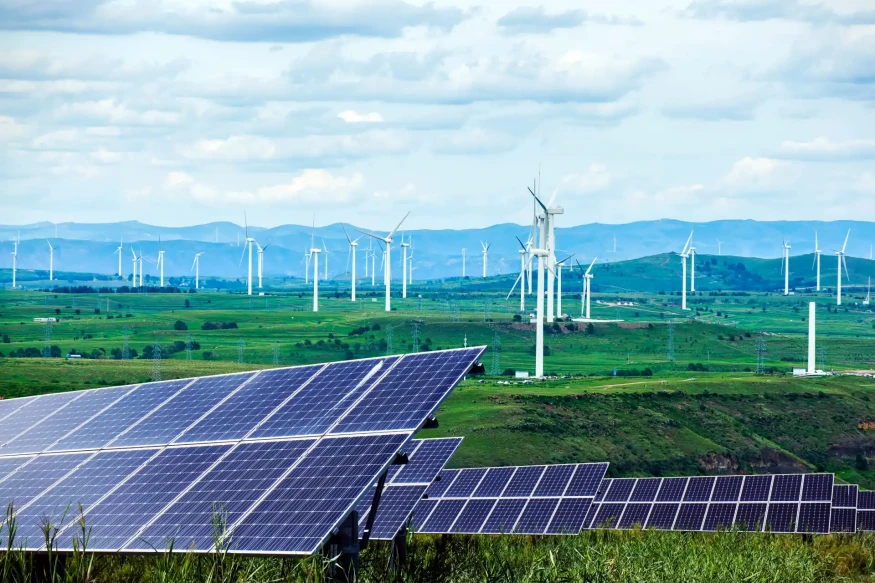
Technology giant Google has selected and officially appointed Shell Energy Europe as its renewable energy supply manager. Shell will oversee Google’s power portfolio using its trading clout and access to battery energy storage systems (BESS) to balance Google’s existing clean energy portfolio in real time even when the sun doesn’t shine and wind doesn’t blow.
The appointment comes as Google opens its first UK data centre in Waltham Cross, Hertfordshire, to support the ever-increasing demand for AI tools like Google Cloud, Search and Maps. It forms part of a two-year, £5 billion investment by the tech company in the UK. The data centre will meet demand for Google’s AI-powered services.
COMPARE PRICES FROM LOCAL INSTALLERS
Compare prices from local companies fast & free
Enter your postcode to compare quotes from leading professionals. We promise to keep your information Safe & Secure. Privacy Policy
Google’s mission is to organise the world’s information in such a way that it is universally accessible and useful to all. It plays an important role in billions of people’s lives through its products and platforms such as Search, Maps, Gmail, Android, Google Play, Google Cloud, Chrome and YouTube making it one of most widely known companies in the world.
The collaboration with Shell Energy Europe operates under the title of Google’s ‘24/7 Carbon-Free Energy Manager’ in the UK. Google will not simply be purchasing renewable energy credits but will be actively matching consumption with zero-carbon sources every hour of the day. The deal is the first-of-its-kind and is aimed at helping to fulfil the tech giant’s goal of running on 100% carbon-free energy by 2030. The global IT giant has had a long-running and successful drive to match its hourly consumption with carbon free electricity on every local grid where it operates to reach this goal.
This strategic collaboration places Shell Energy Europe at the forefront of powering Google’s UK operations entirely with clean renewable energy by 2030. The firm is delivering a game-changing approach to renewable energy integration with its advanced portfolio management and innovative energy storage solutions. Their approach supports both corporate decarbonisation goals and the stability of the UK’s electricity grid.
Shell has agreed to manage the offtake from a long-term agreement Google has with ENGIE for the Moray West project in Scotland, as well as other contracts.
According to a statement from the supermajor, Shell, Shell Energy Europe will use its trading capabilities to manage a renewable power portfolio for Google to lessen the effects of the intermittent nature of renewable generation through access to Shell-run battery energy storage systems. The statement goes on to say that this dynamic balancing work will provide a reliable supply of energy to meet the varying power needs of Google’s data centres at any hour of the day.
Google is working towards achieving net zero emissions across all its operations and value chain, including its data centres. Because data centres require a huge amount of power, they can prove to be a roadblock in decarbonisation plans.
For this reason, the UK government established the AI Energy Council of which Google is a part, in January of this year, to ensure the UK’s energy system can support its AI and computer infrastructure as well as promote the use of renewable energy in technology applications.
Google works hard to make sure that the electricity it uses at its data centres globally comes from renewable energy. It has recently signed a power purchase agreement (PPA) with US solar developer Leeward Renewable Energy and its work with Shell has included the signing of three PPAs since October 2023. These cover offshore wind projects in the Netherlands.
Google said in their recent annual environmental report that its electricity consumption had increased by 27% year-on-year to over 32 terawatt-hours in 2024, of which 75% was already sourced from renewable energy.
Agreements like the one between Google and Shell are vital to maintain the constant power flow that data centres require. BESS is frequently coupled with data centres for example in Splott, Cardiff, the city council unanimously approved a 1,000MW BESS to be placed next to a data centre.
Google’s UK operations are forecast to run at or near 95% carbon-free energy by 2026 due to its clean energy initiatives and the new alliance with Shell Energy Europe. Maud Texier, Google’s Director of EMEA Data Centre Energy, said that the deal should push the company’s British operations closer to its goal with Shell helping to bridge the final hourly gap.
Shell’s tailored energy solutions allow Google to operate its data centre with almost continual clean energy, which effectively reduces the carbon emissions associated with one of the most energy-intensive sectors globally.
When wind and solar power production is high, Shell will store the excess using battery energy storage systems. When demand rises or generation dips, those batteries will discharge back into the UK grid, keeping Google’s operations steady and green. These storage units are effectively acting as buffers absorbing and discharging energy as required.
Shell said that if the batteries are managed efficiently, it will not only support Google’s operational needs but also contribute to the stability and resilience of the UK power system and reinforce the UK’s commitment towards greater use of low-carbon energy. This is vital as the UK ramps up its transition to a low carbon energy future dominated by renewable sources.
David Wells, Executive Vice President of Shell Energy said:
“Shell’s diverse portfolio of renewable power supply, access to batteries and electricity trading and optimisation expertise enables us to meet the evolving needs of world-leading companies like Google and support the growth of data centres. This gives us the scale and flexibility to help Google meet its decarbonisation goals.”
Maud Texier, said:
“Google’s data centres are among the most energy-efficient in the world and we’re focused on responsibly growing our AI infrastructure.
With this agreement, our UK operations are projected to run at or near 95% CFE in 2026 and we will partner with Shell to help close the remaining gap of hourly matching in the UK, enhance energy stability and contribute to the UK’s clean energy transition.”
Find a local installer
Welcome to the biggest directory of UK renewable energy companies