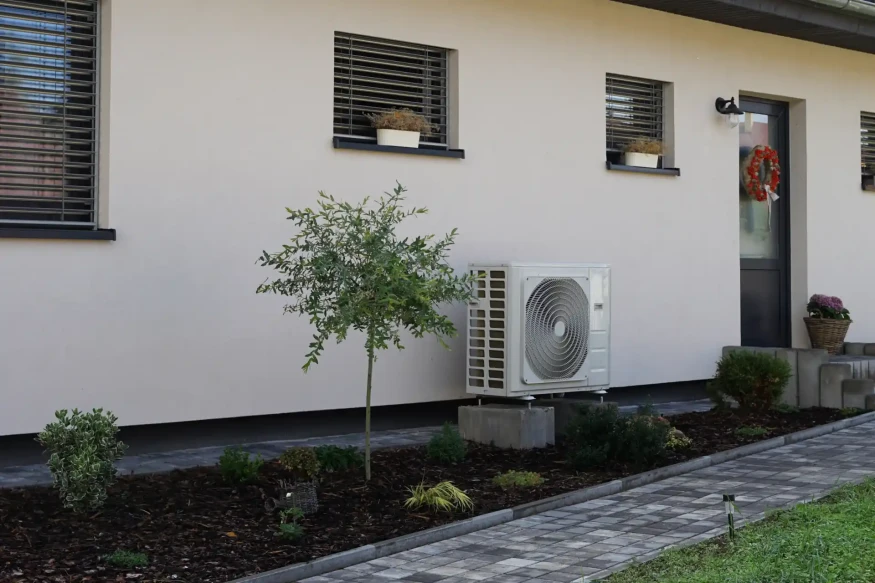
A recent study which examined some of the first homes in the UK designed to meet future low-carbon standards has revealed that they put less pressure on the electricity grid than many industry observers anticipated.
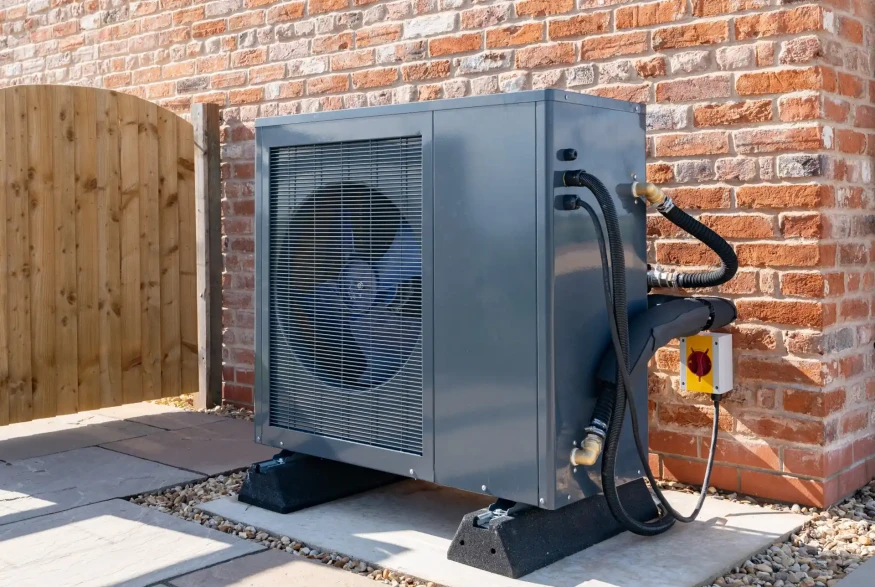
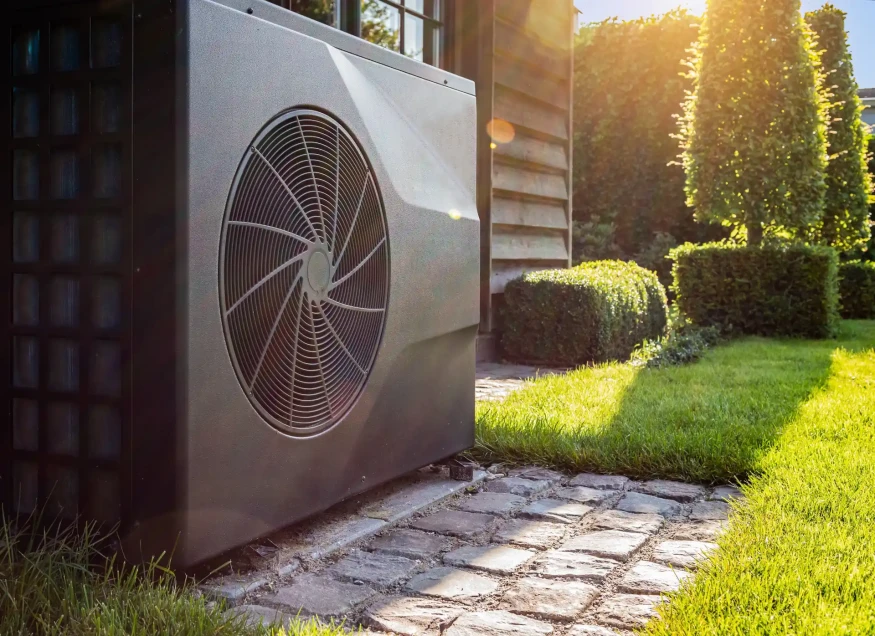
The study focused on Project 80, a twelve-home social housing development in Handsworth, Birmingham. Seven of these properties were equipped with all-electric heating systems – air source heat pumps (ASHPs) for space and water heating rather than oil or gas and supplemented by rooftop solar panels. It is worth noting that the homes did not include battery storage meaning that electricity consumption was drawn directly from the grid.
COMPARE PRICES FROM LOCAL INSTALLERS
Compare prices from local companies fast & free
Enter your postcode to compare quotes from leading professionals. We promise to keep your information Safe & Secure. Privacy Policy
The Project 80 homes were completed in 2022 and adhered to a 2019 version of the incoming future homes standard, which required an 80% reduction in predicted carbon emissions for new-build homes in England compared with 2013 building regulations.
Researchers analysed the electricity consumption data over one year from the seven all-electric homes on the Project 80 social housing development.
The academic lead at Birmingham City University’s Centre for Future Homes, Dr Monica Mateo-Garcia, said that the average peak electricity demand per property was “lower than we would expect.”
Dr Monica Mateo-Garcia added that analysis of the homes’ carbon savings had not yet been published but it suggested that there is still room to improve performance further.
The study’s findings have challenged assumptions about the potential strain of electrifying home heating at scale. The insights gained have proved to be useful for homeowners, developers, investors, and policymakers navigating the transition to low-carbon housing.
Richard Fitton, professor of energy performance at the University of Salford who was not involved in the research, described the study as “a sterling bit of work” and said that “we currently seem to be overpredicting how much power we need in new-build housing.”
Researchers observed that peak electricity demand was much lower than forecast and the timing of peak usage was different between households. This variation in peak demand effectively reduces cumulative strain on the grid, which suggests that real-world household behaviour can significantly impact energy load patterns. Researchers could see that residents weren’t turning on their heating, cookers, and other appliances at the same time.
The study discovered huge variability in energy consumption even between identical houses. This was primarily dictated by the occupant’s habits such as how often they were home and their chosen thermostat settings. This diversity of usage meant the resulting strain on the local grid was lower than theoretical worst-case scenarios suggested. Policymakers and network operators can use these insights to better plan for the electrification of heating and to reduce the risk of supply networks. The research proves that these all-electric homes can substantially cut energy use and emissions.
The researchers wrote in their paper published in the journal Energy and Buildings:
"The measured diversified peak demand was just 14.6% of the total design capacity, highlighting the importance of diversity-based planning over theoretical capacity estimates."
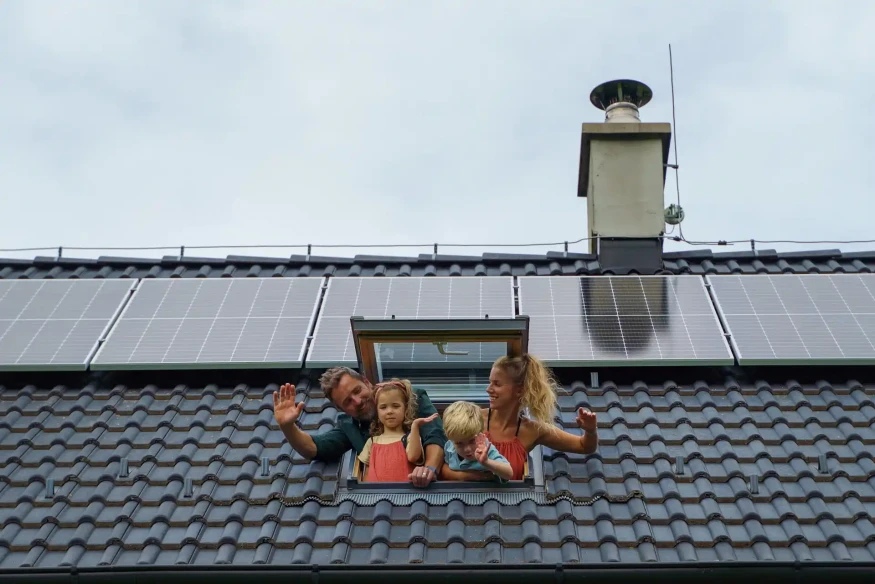
Analysis of the solar panel data revealed that, on average, 65% of the energy generated was used straight away in homes with 35% being sent to the grid.
Currently, buildings account for around 37% of global energy related emissions, with residential properties making up approximately 17% of that total. In June 2019, the UK government legislated a target to achieve net-zero greenhouse gas emissions by 2050, making the UK the first major economy to pass such a law. To help reach this goal, the Future Homes Standard requires all new homes built from 2025 to cut their carbon emissions by 75% to 80%.
A final version of the future homes standard legislation is still to be published. The regulations will most likely require all new homes in England to be fitted with solar panels and heat pumps from 2027 onwards.
Richard Fitton is keen to get the future homes standard out and is urging the government to follow through with it out though he understands that it’s a big task to fulfil.
The big question from the start of this project has been whether fully electric homes would work as promised and achieve their energy efficiency goals in the real world. Critics of heat pumps have been concerned that the devices could put excessive stress on the country’s electricity grid, but this has not proved to be the case.
Annual total energy consumption for each of the seven properties was between 40% and 67% lower than the UK average, which the researchers said was “a huge saving over the typical household”. This reduction is substantial when compared with average national energy use and shows that well-insulated, energy efficient homes can achieve meaningful savings in both energy consumption and carbon emissions.
These findings do however raise questions over the accuracy of standard energy modelling tools, which it seems may overestimate energy demand for heat pump equipped homes. This is good news for developers and planners as it definitely points to the potential for low carbon homes to deliver efficiency benefits beyond theoretical models, especially when combined with renewable energy generation. It’s also important to bear in mind that currently electricity consumption is measured using energy performance certificates (EPC) calculations which are well-known for providing a poor estimation of the actual energy performance of properties.
Tony Hopkin, the head of construction, quality and innovation at Midland Heart, the housing association behind the development said that the findings highlighted the need for realistic modelling for new homes and added that Midland Heart intended to look into options for storing energy at the development, for example with batteries. This could give residents a greater ability to take advantage of smart tariffs when electricity rates are lower at certain times of day.
Midland Heart is currently in the planning process for a development of 95 homes that will adopt the principles of Project 80.
The study also looked at resident experience. Occupants enjoyed benefits such as the absence of damp and mould and improvements in comfort while one household reported better outcomes for asthma management. One family had experienced recurring problems with asthma in the past but had not had any symptoms since moving into one of the Project 80’s homes. Generally, the social housing occupants were delighted with the quality of the buildings compared to where they were living before.
Dr Monica Mateo-Garcia said, “they were really, really happy to be in those homes.” However, there were some behavioural factors that actually reduced system efficiency. Some residents manually activated the heat pump’s electric immersion booster when there was no need as they were unaware that the heat pump already supplied hot water. Dr Monica Mateo-Garcia said that one family had turned off their heat pump and were using electric fan heaters instead in a single room which proved to be much less efficient than heating the whole house with the heat pump. This highlights the importance of educating residents to ensure that low-carbon technologies operate at optimal performance. It’s vital that developers and policy makers understand the human element to maximise the overall effectiveness of energy-efficient housing.
Aaron Gillich, professor of building performance and policy at London South Bank University though he wasn’t involved in this study, strongly supports the rollout of heat pumps.
“We’re finding that all those reasons not to go ahead with a heat pump are slowly but surely falling away.”
The study’s findings have important implications for both energy policy and grid planning by demonstrating that homes fitted with heat pumps and solar panels can manage demand effectively. This means the study supports more ambitious decarbonisation targets, including the UK government’s proposals to require heat pumps and solar panels in all new homes by 2027.
These findings have broader implications for the housing sector as they emphasise the potential benefits of integrating heat pumps and solar panels. They suggest that concerns about grid strain which has tended to slow down the adoption of all-electric homes may not be as serious as previously anticipated. Developers, investors, and councils can be confident that well-designed low-carbon homes can provide both energy efficiency and occupant comfort without causing excessive pressure on the electricity network.
As energy efficiency becomes more central to regulatory standards and important to property buyers, integrating low-carbon technologies may improve the marketability of properties, especially in areas where energy costs are rising. Developers who adopt these solutions early may gain a strategic advantage as the housing sector moves towards sustainable housing.
The Project 80 study clearly shows that homes fitted with heat pumps can manage electricity demand effectively even without battery storage. Energy use is substantially lower than expected and demand flexibility among residents also eases grid pressure. Developers and investors can be more confident about the roll-out of low-carbon heating across the country as the report’s findings show that sustainability and grid reliability can be achieved concurrently.
Find a local installer
Welcome to the biggest directory of UK renewable energy companies