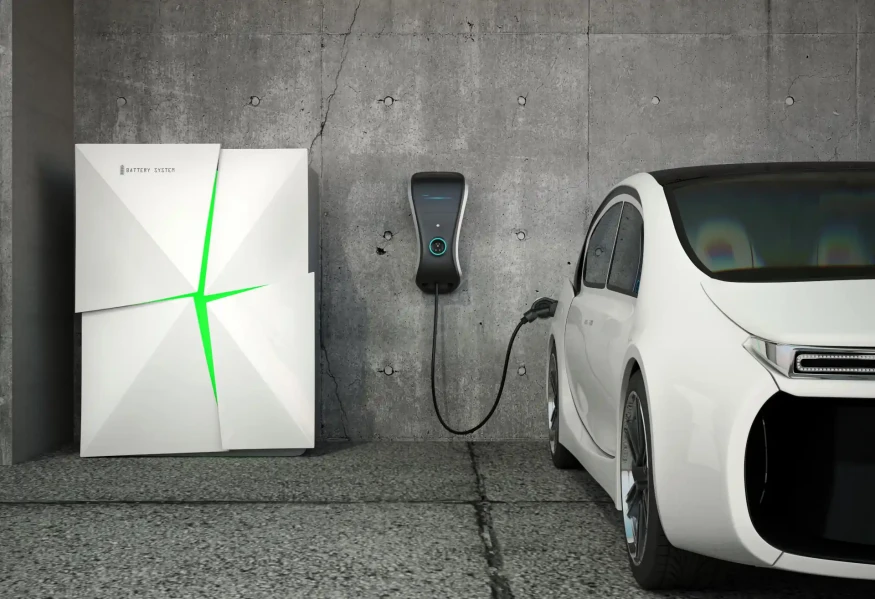
For decades, the humble garage served as little more than a storage space for garden tools, forgotten paint tins, and cobweb-draped exercise equipment. Today, however, a quiet revolution is underway. As homeowners increasingly transition their garages into technical hubs for solar inverters, EV chargers, and lithium-ion battery storage systems, these once-neglected spaces have become sophisticated energy centres at the heart of sustainable properties.
This transformation brings with it a critical vulnerability that many overlook though, which is the threat of moisture ingress and temperature instability. Unlike rusty lawnmowers that might tolerate a bit of damp, high-value renewable energy hardware is extraordinarily sensitive to humidity and condensation, which can lead to terminal corrosion or catastrophic electrical faults. If you’re investing thousands in green technology, you need to know how to protect these installations to safeguard their return on investment.
COMPARE PRICES FROM LOCAL INSTALLERS
Compare prices from local companies fast & free
Enter your postcode to compare quotes from leading professionals. We promise to keep your information Safe & Secure. Privacy Policy
How damp attacks your technology
The damage pathway starts at a microscopic level. Corrosion of circuitry occurs when micro-droplets of water, sometimes invisible to the naked eye, settle on the sensitive electronics within renewable devices. These tiny beads create conductive bridges between circuit pathways, causing short circuits that can render expensive equipment inoperative in an instant. What begins as a minor amount of moisture can quickly cascade into complete system failure.
Another issue that’s common in garages is the biological aspect of moisture problems: mould. Restricted airflow develops fungal growth, which then blocks cooling fans and ventilation grills and worsens the issue, creating a vicious cycle. The complex thermal management systems designed for modern energy hardware can’t function efficiently, or in some cases at all, when the airways become clogged with spores and organic matter.
Temperature fluctuations compound these issues. Renewable energy equipment is engineered to operate within very specific thermal ranges, and the dramatic swings typical in uninsulated garages, freezing on winter nights, then sweltering during summer days, place additional stress on components already battling humidity.
Where is the moisture coming from?
In order to tackle the enemy, you need to identify where it’s coming in. Ground rising damp is a primary culprit, especially in older properties where ineffective damp proof courses in garage slabs can allow moisture to wick its way upwards through the concrete. The capillary action can also raise the humidity levels in the room which creates a hostile environment for sensitive electronics. Strategically deploying dehumidifiers can help you control the moisture on a temporary level but addressing the root cause of the problem is always recommended for more permanent results.
Condensation in the air presents a subtler challenge, creating what’s known as the cold bridge effect, which insulation experts Reticel explain occurs “when heat escapes via building elements that have higher thermal conductivity than surrounding materials. Also known as cold bridges, these aspects of a building envelope effectively become shortcuts for heat to escape, —and, as we know, heat will always find the path of least resistance to flow through and pass more easily.” The fix for this problem lies in improving the thermal envelope through comprehensive insulation, which breaks the temperature difference that causes condensation to form in the first place.
Lastly, the gap problem deserves attention. Air leaks and water ingress from ill-fitting, older garage doors allow wind-driven rain to penetrate the garage during the winter, while still allowing warm air to infiltrate in milder weather. Integrated insulation addresses both issues simultaneously. Best Roller
Garage Doors argue that insulated garage doors “have insulation material (usually foam) fitted within the slats, which helps to regulate temperature inside the garage, reduce energy costs, and dampen noise.” Well-installed garage doors create a weathertight barrier that stabilises internal conditions year-round.
It’s worth investing in a low-cost smart sensor, which typically costs less than £20 but will alert you when conditions drift outside the optimal range, so you can intervene before any damage occurs.
Protecting your green future
A dry, warm garage equals a longer-lasting energy system, so it’s always time and money well-spent. The sophisticated renewable technology we're installing in our homes is a commitment to a more sustainable future, so we want it to last as long as possible. Allowing that hardware to succumb to preventable moisture damage squanders this goal. The solution lies in what building professionals call "fabric first" thinking. This means prioritising upgrades to the building envelope itself rather than relying solely on tools like dehumidifiers or heaters.
A combination of high-quality insulation, effective damp proofing, and properly sealed access points create a stable microclimate that protects your renewable systems passively, without ongoing energy costs. In the long term, spending money on weatherproofing your garage today could save you thousands on replacing the equipment prematurely. Your green tech hub deserves the same protection you'd afford any other valuable asset, because your personal power plant is worth protecting.
Find a local installer
Welcome to the biggest directory of UK renewable energy companies