The UK is experiencing an exceptional surge in solar adoption in 2025 with installations reaching record levels across residential, commercial, and utility sectors.
Solar energy in the UK reached a significant milestone in 2024 according to an Ember report. Renewables accounted for 37% of the UK’s energy compared to fossil fuels at 35%. However, this year is set to be even better.
The past few years have seen a significant surge in solar adoption especially since the cost-of-living crisis. More than 1.5 million UK homes are set up with solar photovoltaic (PV) systems and the nation’s total installed solar capacity has exceeded 18 GW for the first time according to recent industry data. This surge not only demonstrates the growing popularity of renewable energy but also highlights the UK’s commitment to achieving net zero emissions by 2050.
Solar energy output is expected to reach 14.43 kWh in the UK this year. To put this in context, the average home in the UK uses around 2,700 kWh per year meaning this output could potentially power around 4.8 to 5.3 million homes for an entire year. It’s clear to see from this that solar energy has the potential to replace fossil fuels as the UK’s main energy source.
There is a combination of reasons for the surge in solar adoption including government incentives, falling technology costs and an increased public awareness of climate change. The financial and environmental benefits of solar PV have never been clearer to both homeowners and business owners.
In the first half of 2025 the UK has added an extra 2 GW of solar capacity which is close to surpassing the total added for 2024. The Solar Media Research analyst, Josh Cornes says that this is the best start to the year for 10 years and that the UK is set to push on with 3.7GWp of utility-scale ground mount solar PV under construction.
COMPARE PRICES FROM LOCAL INSTALLERS
Compare prices from local companies fast & free
Enter your postcode to compare quotes from leading professionals. We promise to keep your information Safe & Secure. Privacy Policy
At the beginning of the year Josh Cornes predicted that between 3GW and 3.5GW would be added to the UK market in 2025. However, with the completion of Cleve Hill solar park and the residential rooftop market being stronger than expected the UK has already surged past 2GWp.
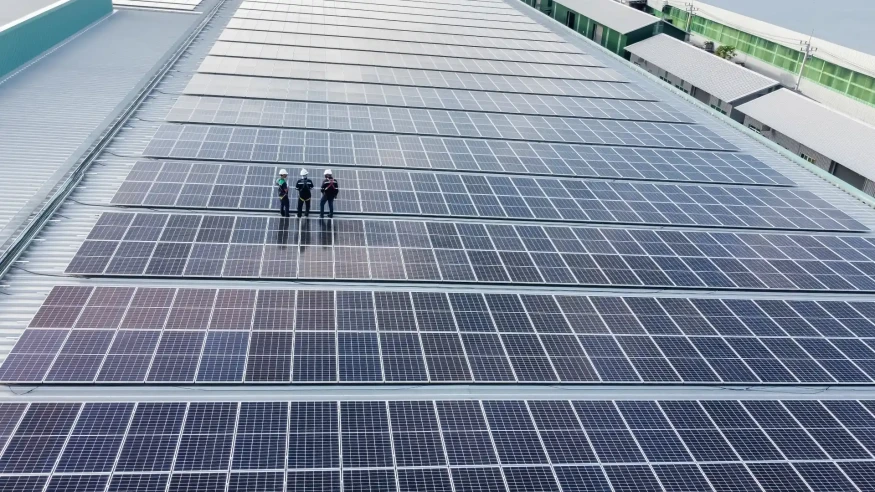
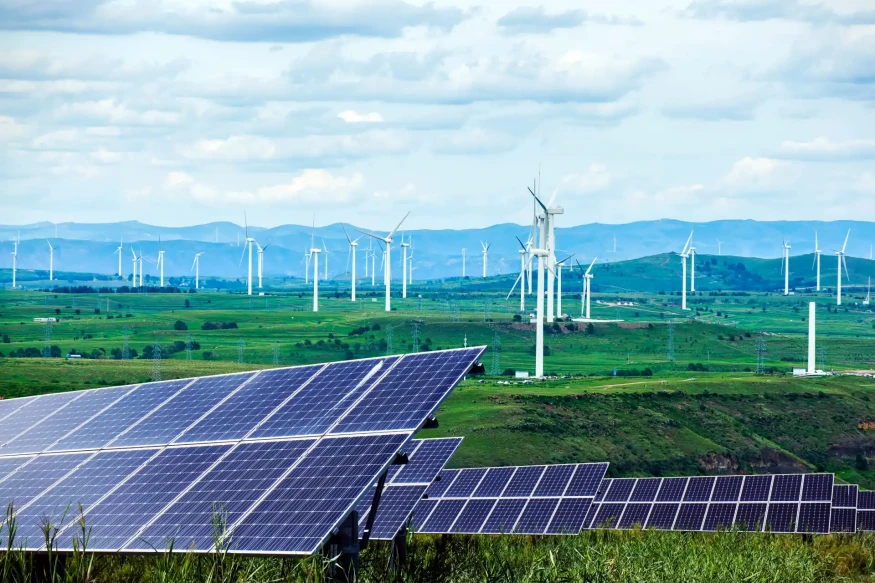
Ground mount solar PV continues to make up over 70% of the capacity with over 1.5GWp completed. The completion of Cleve Hill solar park (373MW), the first solar nationally significant infrastructure project (NSIP), has been a massive boost to this along with 14 other sites 50MWp or above which have also been completed. These installations make up over 60% of the added capacity, with Low Carbon and NextEnergy recently energising over 400MWp between them.
It's likely that double the amount of ground mount installations seen in 2024 will be completed in 2025 as a further 1GW started construction over a year ago in 2024 and the standard build out times are anywhere between 30–60 weeks.
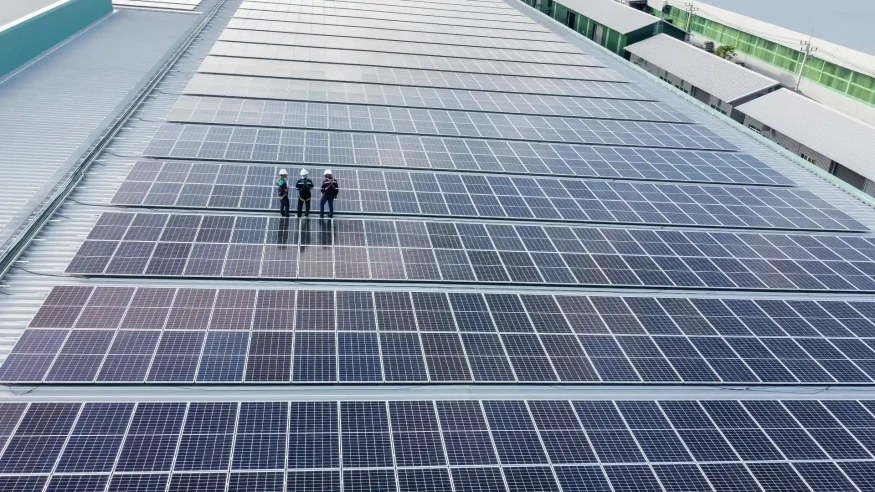
Commercial rooftop is continuing at a steady pace and has got off to a great start in 2025 being up 20% year on year.
The new build mandate introduced by the government this year which confirmed that the Future Homes Standard (FHS) will include provision for all new build properties to have solar PV installed has had a big impact on rooftop solar as a whole. The government-owned clean energy company Great British Energy has also awarded £10m funding for further rooftop solar rollout.
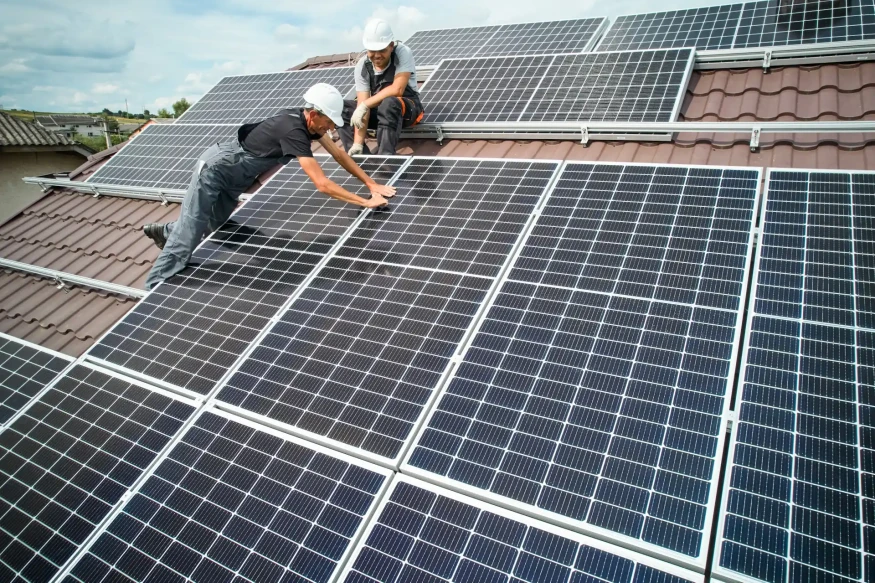
The rapid expansion in rooftop solar is certainly not limited to new builds. Retrofits and upgrades to existing properties now account for a significant share of installations. Regions with high solar irradiance such as the Southeast and Southwest are experiencing particularly strong growth though it is also spreading rapidly across the UK.
There has been a big increase in submissions for utility scale solar farms. Over 7GWp has been submitted to date this year with over 5GW being submitted in the second quarter of this year making this the best first half of the year in history, with the second quarter of the year being the best quarter for submissions.
Despite submissions being at a record high, because most developers will have already got their projects into planning, the next 3 months are expected to be much quieter while the Local Planning Authorities (LPAs) catch up on approving the existing 8GWp.
A new analysis from Carbon Brief found that between January and May this year UK solar farms and rooftops generated a record 7.6 terawatt hours of electricity which is a 42% jump on the same period in 2024. This record number of terawatt hours has overtaken the 5.4TWh from the same period last year and means that the UK’s solar capacity has also increased 160% in the past decade.
Electricity output from UK solar installations saw big jumps in March according to the analysis where the 2,320 megawatts (MW) average was up 66% from 2024 and in April, up 53% to 3,189MW.
Solar hit a new half-hourly record of 13.2 gigawatts (GW) on 6 April and, for the first time, accounted for more than 10% of monthly electricity generation in two consecutive months (April and May). Solar increased by 37% year on year in May with outreach reaching 3,383MW. May also hit a new high of 2.5TWh with the previous record held being set in June at 2.1TWh.
The solar electricity generated so far this year means that the need to import gas at a cost of around £600m which would have released 6 million tonnes of carbon dioxide (MtCO2) when burned, has been avoided according to Carbon Brief.
Even taking this increase into account, the Carbon Brief report found that solar was still only the UK’s sixth largest source of electricity in 2025 after gas (377TWh, wind (33TWh, imports (18TWh), nuclear (15TWh), and biomass (8.0TWh).
The report also said that this year’s solar was “partly driven” by the record sunniest spring as well as rising capacity which reached 20.2GW in 2024, up 2.3GW from 17.9KW in 2023. Solar capacity is due to reach at least 45GW by 2030, as part of the government’s ambition to become a clean energy superpower.
The UK saw 653 hours of sunshine between the 1st of March and the 31st of May this year which is the sunniest on record since 1910. According to an analysis by the Met office and Carbon Brief UK sunshine has been on the increase since the 1980s, with the spring months being on average 15% sunnier over the past 10 years than the reference period of 1961-1980 used by the analysis.
Emily Carlisle, a scientist at the Met office said that seven of the top 10 sunniest springs on record for the UK since 1910 have occurred since the year 2000 and that 2025 was the fourth sunniest season overall.
One outcome of the extra sunnier spring this year has been an unusually high solar output per unit of installed capacity. This is a metric known as the “capacity factor” of the UK’s solar plants.
Another factor in the mix is that as energy prices have fallen a little, capacity has continued to grow leading to early 2025 seeing the strongest start to the year since 2012.
The UK has exceeded 22GWp of operational capacity this year with almost 14GW coming from ground mount alone. Records are being set this year with planning submissions at both LPA and Government level. However, there are still a number of issues that need to be resolved such as planning, which is too slow, grid connectivity which is a work in progress and a general lack of resources when it comes to building out this large pipeline.
The record growth in solar panel installations in 2025 so far has been born out of necessity, innovation, and incentives. The key factors behind the growth are: government incentives with policies such as the Smart Export Guarantee (SEG) and zero VAT on solar panels making installations more attractive and affordable; rising energy costs leading to householders seeking energy independence; technological advancements making solar panels more efficient and aesthetically pleasing; solar battery solutions allowing households to maximise self-consumption, and the UK’s legally binding net zero climate commitments which has spurred both public and private investment in clean energy.
Find a local installer
Welcome to the biggest directory of UK renewable energy companies